



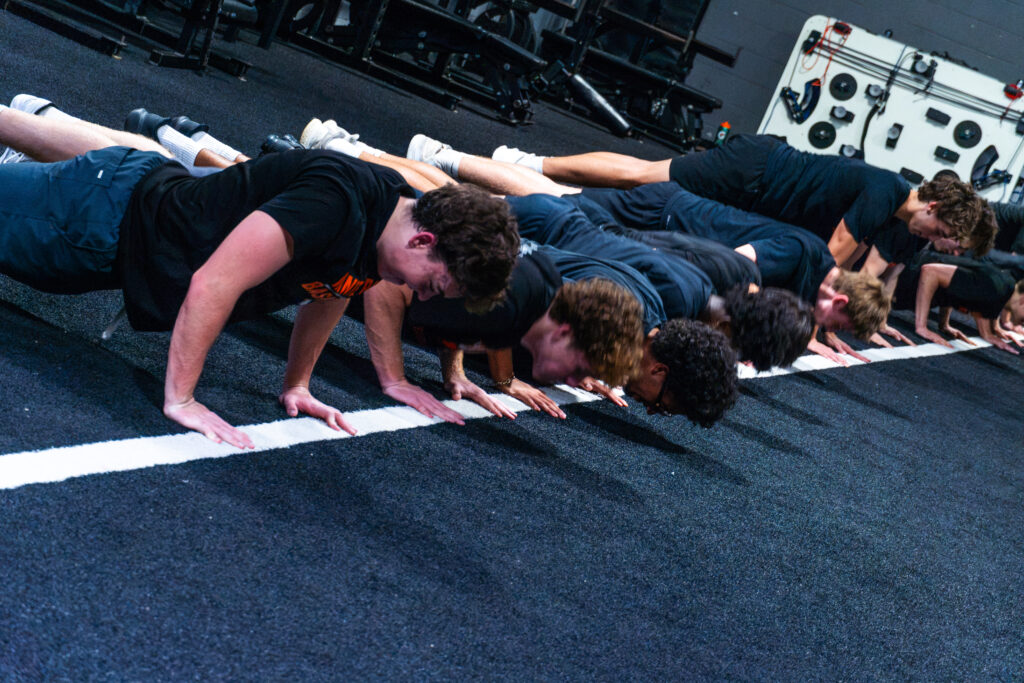
Teaching Accountability Through Training: Lessons That Extend Beyond the Gym
In sports performance, we spend a significant amount of time discussing strength, speed, power, and athletic development. We measure progress, evaluate movement, and design training programs to help athletes reach their physical potential.
But some of the most valuable lessons athletes learn through training have very little to do with how much weight they lift or how fast they run.
One of those lessons is accountability.
For young athletes, learning to take responsibility for their effort, preparation, attitude, and actions can have a lasting impact on their development. These qualities influence not only their success in sports but also how they approach school, relationships, and eventually their professional lives.
At SPECTRUM, we believe athletic development extends beyond physical performance. Training provides an opportunity to teach habits and behaviors that can benefit athletes long after their competitive careers are over.
We’re not just developing better athletes. We’re helping develop more responsible, disciplined, and accountable individuals.
1. Accountability Starts With Ownership
Accountability is often misunderstood as simply following rules or doing what a coach tells you to do.
But true accountability goes much deeper.
It’s the ability to take ownership of your actions, recognize how your decisions influence outcomes, and accept responsibility for the things within your control.
For young athletes, this begins with simple behaviors.
Are they arriving on time?
Are they prepared to train?
Are they listening when instructions are given?
Are they putting forth consistent effort?
Are they taking responsibility when something doesn’t go as planned?
These may seem like small details, but they establish the foundation for more meaningful accountability as athletes mature.
A coach can establish expectations, provide instruction, and create an environment that encourages development.
But ultimately, the athlete must choose how they respond.
Coaches can provide the opportunity. Athletes must take ownership of the process.
This is one of the most important lessons training can teach.
2. Effort Is a Choice
Every athlete has different physical abilities.
Some are naturally faster. Others are stronger, more coordinated, or physically mature at an earlier age.
Those differences are a normal part of athletic development.
What matters is helping athletes understand the distinction between their current abilities and the effort they choose to invest in improving them.
An athlete may not be the strongest person in their training group, but they can consistently demonstrate focus, preparation, and a willingness to improve.
They may struggle with a particular exercise, but they can respond by listening, practicing, and making adjustments.
This doesn’t mean athletes should be expected to train at maximum intensity every day. Appropriate training requires managing fatigue, recovery, and the demands of competition.
Instead, accountability means approaching each session with the appropriate level of effort and attention for the work being performed.
Sometimes that means pushing through a challenging strength session.
Other times, it means demonstrating patience during technical instruction or respecting the purpose of a recovery session.
At SPECTRUM, we want athletes to understand that effort isn’t simply about working harder. It’s about committing to the purpose of the training.
When athletes begin taking ownership of their effort, they develop a mindset that extends well beyond sports.
3. Consistency Teaches Discipline
One of the most valuable aspects of structured training is that progress requires consistency.
Strength doesn’t develop from one workout.
Speed doesn’t improve from one sprint session.
Movement skills aren’t mastered after a few repetitions.
Meaningful physical development requires repeated exposure to appropriate training over time.
For young athletes, this creates an opportunity to learn the relationship between consistent behaviors and long-term outcomes.
Showing up matters.
Paying attention matters.
Completing the fundamentals matters.
Following through matters.
In a world where immediate results are often expected, training teaches athletes that improvement is a process.
There are no shortcuts that replace consistent, purposeful work.
This lesson becomes especially important when progress slows.
An athlete may experience rapid improvements during the early stages of training, followed by periods when gains become more gradual.
Learning to remain committed during those periods helps develop discipline and patience.
Motivation may get an athlete started. Discipline helps them continue when progress becomes difficult.
And that discipline can translate directly into other areas of life.
Studying for an exam, learning a new skill, or completing a long-term project all require the same ability to remain committed when immediate rewards aren’t guaranteed.
4. Objective Testing Creates Opportunities for Accountability
One of the unique advantages of sports performance training is our ability to measure progress.
At SPECTRUM, we use objective testing to evaluate physical qualities such as acceleration, maximum velocity, vertical jump performance, and change of direction.
These assessments help guide our programming and provide athletes with feedback about their development.
But they also create valuable educational opportunities.
When an athlete sees their performance improve, we can connect that progress to the training process.
When performance doesn’t improve as expected, we can evaluate possible contributing factors.
Was the athlete consistent with training?
Were they recovering appropriately?
Did their competitive schedule affect performance?
Does the training program need to be adjusted?
These conversations help athletes understand that development involves both personal responsibility and thoughtful coaching.
Importantly, testing shouldn’t be used to shame athletes or suggest that every disappointing result reflects poor effort.
Performance is influenced by many factors, including growth, maturation, fatigue, health, and training history.
Accountability means learning to evaluate those factors honestly rather than immediately making excuses or assigning blame.
The numbers provide feedback. What we do with that feedback determines how we move forward.
This approach teaches athletes to view results as information rather than simply a judgment of success or failure.
5. Learning to Respond to Coaching
Being coachable is closely connected to accountability.
Young athletes often receive instruction from multiple sources, including sport coaches, teachers, parents, and performance professionals.
Learning how to receive feedback is an important part of their development.
At SPECTRUM, our coaches provide instruction on movement mechanics, exercise technique, and training execution.
Sometimes that feedback is positive reinforcement.
Other times, it involves identifying something that needs to change.
An accountable athlete learns to recognize that constructive criticism is an opportunity for improvement.
Instead of becoming defensive or frustrated, they begin asking better questions.
What am I doing incorrectly?
What adjustment should I make?
How can I improve on the next repetition?
This process develops self-awareness and problem-solving skills.
It also teaches athletes that making a mistake isn’t the problem.
The important part is recognizing the mistake, accepting feedback, and taking action to improve.
That mindset is valuable in the classroom, workplace, and virtually every other environment where learning and development take place.
6. Accountability to the Group
Although many aspects of sports performance training are individualized, athletes frequently train in a group environment.
This creates another opportunity to teach accountability.
Athletes begin to recognize that their actions can influence the people around them.
Arriving late can disrupt the session.
Failing to pay attention can affect the flow of training.
A negative attitude can influence the energy of the group.
Conversely, consistent effort, encouragement, and positive leadership can elevate the entire training environment.
At SPECTRUM, we want athletes to understand that being part of a group comes with responsibilities.
That doesn’t mean every athlete must be the loudest or most vocal leader.
Leadership can be demonstrated through actions.
An athlete who consistently arrives prepared, listens to instructions, works with purpose, and supports teammates can have a meaningful impact on the training environment.
This is especially important for younger athletes who are learning what it means to be part of a team.
Accountability isn’t just about what you owe yourself. It’s also about what you contribute to the people around you.
7. Parents and Coaches Must Reinforce the Same Message
Teaching accountability requires consistency from the adults involved in an athlete’s development.
Coaches establish expectations and provide opportunities for athletes to take responsibility.
Parents reinforce those lessons through the expectations they establish outside the training environment.
But there’s an important distinction between supporting accountability and removing every obstacle an athlete encounters.
When adults constantly intervene, make excuses, or solve every problem, young athletes may miss opportunities to develop independence.
For example, if an athlete forgets their training shoes, that experience can become a lesson in preparation.
If an athlete struggles with a movement, the appropriate response may be to encourage them to ask questions and work through the challenge rather than immediately blaming the exercise or coach.
If an athlete isn’t progressing as expected, the conversation should focus on understanding the process and identifying constructive next steps.
Of course, expectations must remain appropriate for the athlete’s age and maturity.
Younger athletes require more guidance and structure. As they develop, they can gradually assume greater responsibility.
The goal isn’t to create unnecessary pressure.
It’s to help athletes build the confidence and independence to manage their own responsibilities.
At SPECTRUM, we believe the most productive environment is one where coaches, parents, and athletes understand their roles and work together toward long-term development.
8. Accountability Must Be Taught, Not Just Demanded
It’s easy for coaches to tell athletes to be accountable.
It’s much more challenging—and much more valuable—to actually teach accountability.
Young athletes aren’t always going to demonstrate perfect focus, preparation, or decision-making.
They’re still learning.
Just as we wouldn’t expect an athlete to master a complex movement after one explanation, we shouldn’t expect them to develop strong personal habits without guidance and repetition.
Coaches must clearly communicate expectations, explain why those expectations matter, and provide consistent feedback.
They must also model the behaviors they expect.
If we expect athletes to be prepared, our coaches must be prepared.
If we expect athletes to communicate, our coaches must communicate effectively.
If we expect athletes to take responsibility for mistakes, our coaches must demonstrate that same willingness.
Accountability works best when it is part of the culture rather than simply a consequence for doing something wrong.
At SPECTRUM, our coaches have an opportunity to influence athletes through hundreds of small interactions throughout the training process.
Those interactions matter.
How we respond when an athlete struggles matters.
How we recognize effort matters.
How we reinforce expectations matters.
Over time, these experiences can help shape how athletes approach challenges both inside and outside the gym.
9. The Bigger Picture: Preparing Athletes for Life
Most young athletes won’t become professional athletes.
Even those who compete at the collegiate or professional level will eventually transition into careers and responsibilities beyond sports.
But the lessons learned through training can remain valuable throughout their lives.
Learning to arrive prepared.
Understanding the importance of consistency.
Accepting constructive feedback.
Taking ownership of mistakes.
Supporting teammates.
Recognizing that progress requires patience and effort.
These are life skills.
And while sports provide an excellent environment for developing them, those lessons don’t happen automatically.
They require intentional coaching and an environment where personal development is valued alongside physical performance.
At SPECTRUM, we’ve spent more than 20 years working with athletes across different ages, sports, and levels of competition.
During that time, we’ve seen the importance of developing more than physical qualities.
The athletes who make the greatest impression aren’t always the fastest, strongest, or most talented.
Often, they’re the ones who demonstrate consistency, humility, coachability, and a willingness to take responsibility for their development.
Those characteristics matter long after their final game.
The Bottom Line: Training Builds More Than Athletes
Strength, speed, and power are important components of sports performance.
But the training process provides an opportunity to develop something equally valuable: character.
Accountability teaches athletes that their choices matter.
It helps them understand the connection between preparation, effort, consistency, and results.
It teaches them to accept feedback, respond to challenges, and take ownership of their development.
And perhaps most importantly, it helps prepare them for situations where a coach or parent won’t always be there to provide direction.
At SPECTRUM, our responsibility extends beyond designing effective training programs.
We have an opportunity to educate, mentor, and positively influence the athletes who walk through our doors.
We measure success through strength, speed, and athletic performance. But some of our most important results can’t be measured with a stopwatch or a weight on the bar.
Because the ultimate goal isn’t just to develop athletes who perform better in sports. It’s to help develop individuals who are better prepared for life.


Leave a Reply