



Adult Strength Training for Injury Reduction: Building a More Resilient Body
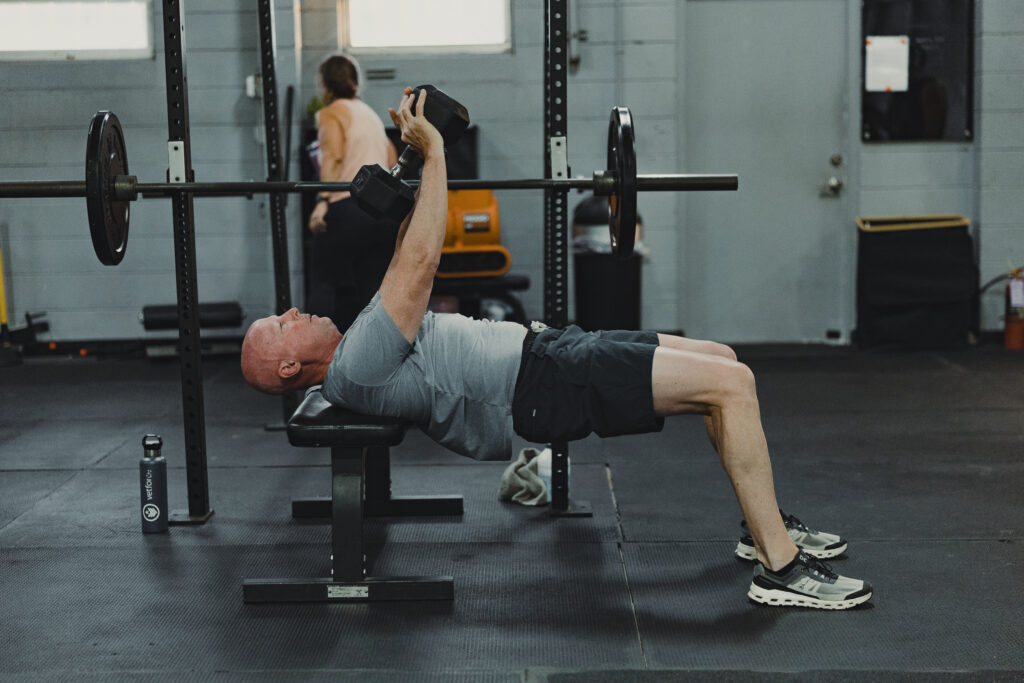
When most adults think about strength training, they tend to think about building muscle, getting stronger, or improving how they look.
Those are certainly benefits. But one of the most important reasons to strength train has very little to do with appearance.
Strength training helps build a body that is better prepared to handle the demands of everyday life.
Whether that means picking up your kids, carrying groceries, playing golf, running, traveling, doing yard work, or simply getting up and down from the floor, your body is constantly being asked to produce and absorb force.
You can’t eliminate the possibility of injury. But you can improve your body’s ability to tolerate those demands.
That’s where strength training becomes so valuable.
Injury Prevention vs. Injury Reduction
We prefer the term injury reduction rather than injury prevention.
Why?
Because no training program can guarantee that someone won’t get injured. Accidents happen. People fall. Sports are unpredictable. Sometimes tissues are exposed to forces that exceed what they can tolerate regardless of how well someone has trained.
The goal isn’t to create an injury-proof body.
The goal is to increase your capacity so everyday stresses are less likely to exceed what your body can handle.
That’s an important distinction.
Strength training gives muscles, tendons, joints, and the overall movement system regular exposure to progressively greater demands. Over time, the body adapts.
You become better prepared for the physical stresses life places on you.
Strength Creates Capacity
One of the simplest ways to think about injury reduction is the relationship between demand and capacity.
Every physical activity creates a demand.
Walking up stairs creates a demand. Lifting a suitcase into an overhead compartment creates a demand. Running creates a greater demand. Sprinting, jumping, cutting, and playing recreational sports create even larger demands.
Your body has a certain capacity to tolerate those stresses.
Problems can occur when the demand placed on the body consistently exceeds its current capacity.
Strength training helps increase that capacity.
If lifting a 40-pound object represents nearly everything you’re capable of producing, that’s a significant stress. If you’ve progressively developed the strength to comfortably handle much greater loads, that same 40 pounds represents a much smaller percentage of your capacity.
The task didn’t change. You did.
That’s one of the fundamental reasons getting stronger matters.
Strong Muscles Help Support Joints
Muscles do much more than move our bodies.
They also help control movement and absorb force.
Strong muscles surrounding the hips, knees, shoulders, and spine can help us better manage the forces we experience during activity.
Think about stepping off a curb or walking down stairs. Your muscles aren’t simply producing movement—they’re controlling it.
The same thing happens when you bend down, catch yourself after losing your balance, change direction, or lower something heavy to the ground.
Being able to produce force is important.
Being able to absorb and control force may be just as important.
A well-designed strength program develops both.
Tendons Need Load Too
Strength training isn’t only about muscles.
Tendons connect muscle to bone and play an important role in transferring force throughout the body. Like muscles, tendons respond to appropriately progressed loading.
Avoiding stress entirely doesn’t necessarily make tissues more resilient.
The body needs an appropriate stimulus to adapt.
That’s one reason progressive resistance training is so important. The goal isn’t to immediately expose someone to the heaviest weight possible. It’s to gradually increase the challenge as the body becomes better prepared to handle it.
Load isn’t automatically the enemy. Properly applied load is part of the solution.
Strength Improves Movement Options
Strength also gives you more options.
If someone lacks strength in the legs and hips, getting off the floor becomes more difficult. If the upper body isn’t strong enough, pushing or pulling heavy objects becomes more challenging. If the trunk can’t effectively control force, other areas may have to compensate.
We often hear people say they need more flexibility when what they may actually need is more strength and control within the range of motion they already have.
Mobility is important, but simply being able to reach a position isn’t always enough.
Can you control that position?
Can you produce force there?
Can you absorb force there?
Can you repeat it when you’re tired?
Strength training helps turn available movement into usable movement.
Don’t Forget Balance and Single-Leg Strength
As we get older, maintaining strength becomes increasingly important, but so does maintaining our ability to control our body.
That’s why a good fitness program shouldn’t consist entirely of machines or exercises performed with both feet planted firmly on the ground.
Single-leg exercises, carries, step-ups, split squats, lunges, and other movements that challenge stability can have an important place in a complete program.
The objective isn’t to make every exercise unstable.
It’s to develop enough strength, balance, coordination, and control that you are prepared for situations outside the gym that aren’t perfectly predictable.
Real life doesn’t happen on a machine.
The Goal Isn’t to Avoid Challenging Movements
As people experience aches, pains, or previous injuries, it’s common to start creating a growing list of movements they avoid.
“I don’t squat because of my knees.”
“I don’t lift overhead because of my shoulder.”
“I don’t deadlift because of my back.”
Sometimes modifications are absolutely appropriate, particularly when dealing with an active injury.
But permanently avoiding movement isn’t always the best long-term strategy.
A better question may be:
How can we appropriately build your capacity to perform that movement?
Maybe we adjust the range of motion.
Maybe we decrease the load.
Maybe we change the exercise.
Maybe we improve technique.
Then, over time, we progressively increase the challenge.
The goal of training shouldn’t be to make your world smaller.
It should help expand what your body is capable of doing.
Consistency Matters More Than Complexity
Strength training for injury reduction doesn’t need to be complicated.
For most adults, the foundation is relatively simple: squat, hinge, push, pull, carry, step, rotate, and move in multiple directions.
The exercises themselves can change depending on the individual.
What’s important is that the program is progressive.
The resistance should gradually increase. Movement quality should improve. Exercises can become more challenging as capacity increases.
That doesn’t require destroying yourself in the gym.
In fact, the opposite is usually true.
A good training program should provide enough stimulus to create adaptation while still allowing you to recover and live your life.
Train for the Life You Want to Live
Strength training isn’t just about what you can lift today.
It’s about maintaining your ability to do the things you enjoy tomorrow.
We want to be able to travel. Play with our kids and grandkids. Participate in sports. Carry our own luggage. Get off the floor. Work around the house. Go hiking. Play golf. Stay independent.
Those activities all require physical capacity.
At SPECTRUM, our approach to adult fitness isn’t centered around simply burning calories or making workouts as difficult as possible.
We want training to have a purpose.
Build strength. Maintain muscle. Improve movement. Increase capacity. Develop a body that is prepared for the demands of life.
Strength training can’t prevent every injury.
But becoming stronger, more capable, and more resilient gives your body a better foundation for whatever life asks it to do.
Don’t train simply to get through today’s workout. Train so you’re better prepared for everything outside of it.
Leave a Reply