



Beyond Rehab: Why Returning to Sport Is More Than Being Pain-Free
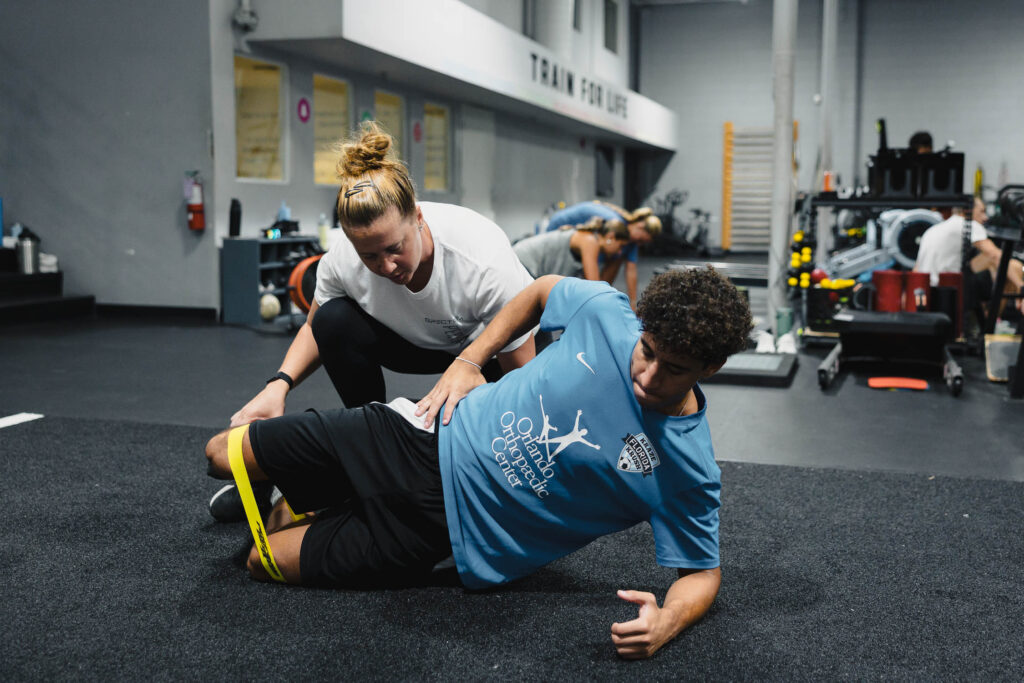
Pain is often the first thing athletes want to eliminate after an injury. But at SPECTRUM Performance & Physical Therapy, we believe pain-free should be the beginning of the conversation—not the end.
Too often, athletes are cleared to return to practice simply because they no longer hurt. While that’s an important milestone, it doesn’t necessarily mean they’re physically prepared for the demands of competition.
Returning to sport isn’t about surviving the first game. It’s about returning with the confidence, strength, speed, and resilience to perform at your highest level while minimizing the risk of re-injury.
That’s why we don’t just focus on rehabilitation. We focus on performance after rehabilitation.
The Difference Between Feeling Better and Being Ready
Imagine an athlete recovering from an ACL reconstruction.
They can walk without pain.
They have full range of motion.
Their swelling is gone.
From the outside, everything appears normal.
But beneath the surface, they may still have:
- Reduced strength in the injured leg
- Poor landing mechanics
- Slower reaction times
- Decreased power production
- Lower confidence when cutting or jumping
- Compensatory movement patterns that increase injury risk
If those deficits aren’t addressed before returning to competition, the athlete isn’t truly prepared for the demands of their sport.
Being pain-free simply means the injury has healed enough that it no longer hurts.
Being ready means your body can once again tolerate the speed, force, unpredictability, and intensity of competition.
Those are two very different things.
Every Sport Places Unique Demands on the Body
An athlete doesn’t just run in a straight line.
Sports require rapid acceleration, sudden deceleration, explosive jumping, hard landings, cutting, sprinting, rotating, reacting to opponents, and making split-second decisions under fatigue.
Your rehabilitation should prepare you for those exact movements.
For example:
A soccer player must accelerate, decelerate, cut, and strike the ball repeatedly.
A basketball player must jump, land, change direction, and absorb force dozens of times during a game.
A baseball player must rotate explosively while throwing or swinging.
A swimmer must repeatedly generate power through the shoulders while maintaining stability.
Returning to sport means preparing your body for these specific movement demands—not just everyday activities.
Strength Matters More Than You Think
One of the biggest predictors of successful return to sport is strength.
Following an injury, athletes often lose significant muscle mass and force-producing capacity.
Even after months of rehabilitation, many athletes still demonstrate meaningful strength differences between limbs.
These deficits can lead to:
- Slower sprinting
- Lower jump height
- Poor force absorption
- Reduced power output
- Altered movement patterns
- Increased stress on healthy joints and tissues
Our goal isn’t simply to restore movement.
Our goal is to restore performance.
Power Is Often the Missing Piece
Many rehabilitation programs successfully restore mobility and basic strength.
But sport isn’t performed slowly.
Sport requires explosive movement.
Athletes need to rapidly produce force to sprint, jump, cut, throw, and react.
That’s where power development becomes essential.
Power training bridges the gap between traditional rehabilitation and athletic performance by teaching the body to generate force quickly while maintaining control.
Without restoring power, athletes often return feeling slower, less explosive, and less confident than before their injury.
Confidence Can’t Be Prescribed
One of the most overlooked aspects of recovery is confidence.
Many athletes receive medical clearance but still hesitate during competition.
They may avoid planting on the injured leg.
They hesitate before jumping.
They slow down before changing direction.
This isn’t a physical limitation.
It’s a performance limitation.
Confidence comes from preparation.
When athletes consistently demonstrate that they can sprint, jump, cut, decelerate, and react under progressively increasing demands, confidence naturally follows.
Why Objective Testing Matters
One of the biggest mistakes in sports medicine is relying solely on time since surgery or how an athlete feels.
Instead, we believe decisions should be based on measurable performance.
Objective testing allows us to identify lingering deficits that may not be obvious during everyday movement.
At SPECTRUM, we evaluate factors such as:
- Lower body strength
- Power production
- Jump performance
- Landing mechanics
- Force symmetry
- Balance
- Change-of-direction ability
- Sprint performance
- Movement quality
Using sports science technology and performance testing, we can compare an athlete’s current abilities against established benchmarks and monitor progress throughout recovery.
This provides both athletes and parents with greater confidence that the return-to-sport decision is supported by objective data—not guesswork.
Rehabilitation Should Progress Toward Performance
Recovery should follow a progression.
Phase 1: Protect & Restore
- Reduce pain
- Restore mobility
- Control swelling
- Re-establish normal movement
Phase 2: Build Capacity
- Restore strength
- Improve stability
- Increase work capacity
- Correct movement deficiencies
Phase 3: Develop Performance
- Explosive power
- Sprint mechanics
- Plyometrics
- Deceleration
- Agility
- Sport-specific movement
Phase 4: Return to Competition
- Practice integration
- Full-speed movement
- Reactive drills
- Confidence building
- Performance testing
- Return-to-play decision making
Too often, rehabilitation ends somewhere between Phase 2 and Phase 3.
That’s exactly where athletic performance begins.
Why Collaboration Creates Better Outcomes
One of the greatest advantages of SPECTRUM is the seamless collaboration between our physical therapists and performance coaches.
Rather than working in separate facilities with different philosophies, our team communicates throughout the entire recovery process.
As healing progresses, rehabilitation naturally transitions into sports performance training.
This creates a smoother progression from injury to competition while ensuring every stage of recovery builds upon the last.
The result is an athlete who doesn’t simply return to play.
They return prepared to perform.
The Goal Isn’t Just to Play Again
Every athlete has a different goal.
Some want to earn a college scholarship.
Some want to make varsity.
Some simply want to finish their season healthy.
Regardless of the goal, the objective remains the same:
Return stronger.
Return smarter.
Return more resilient.
Returning to sport should never be about checking a box on the calendar.
It should be about ensuring your body is prepared for every sprint, jump, cut, landing, and collision that competition demands.
Final Thoughts
Pain relief is important—but it isn’t the finish line.
Successful rehabilitation means restoring the qualities that make athletes successful in the first place: strength, power, speed, confidence, movement quality, and resilience.
When rehabilitation and performance work together, athletes don’t just recover from injury.
They build a stronger foundation for the future.
At SPECTRUM Performance & Physical Therapy, our mission is simple: help every athlete return to sport stronger, safer, and more prepared than when they left.
Because the ultimate goal isn’t just getting back on the field.
It’s performing at your best once you get there.
Leave a Reply