



Why Adults Need More Stability Work, Not More Stretching
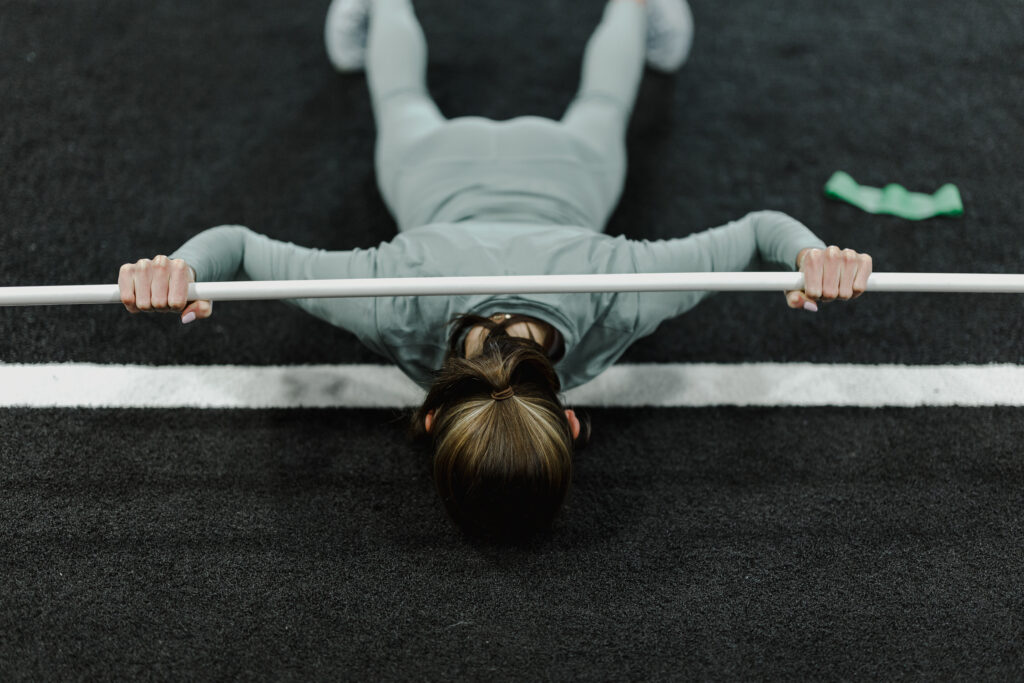
Walk into almost any gym and you will hear a familiar phrase: “I just need to stretch more.” Adults dealing with tight hips, stiff backs, or nagging aches often assume the solution is simply improving flexibility. While stretching can have a place in a training program, it is rarely the root solution to the discomfort many adults experience.
In reality, what most adults need is not more passive stretching — they need better stability and control.
Understanding the difference between flexibility and stability can dramatically change how adults approach training, reduce chronic aches, and improve how the body moves in everyday life.
Flexibility vs. Stability: Understanding the Difference
Flexibility refers to the ability of a joint or muscle to move through a range of motion.
Stability, on the other hand, refers to the body’s ability to control that range of motion.
Many adults actually possess enough range of motion for daily tasks. The problem is that the body does not feel strong or coordinated enough to control that motion safely. When the nervous system senses a lack of control, it often responds by creating protective tension, which feels like “tightness.”
In these cases, stretching the area may provide temporary relief, but the underlying problem remains unresolved.
Why Adults Feel “Tight”
Tightness is often misunderstood. It is not always caused by muscles being too short. Frequently, tightness is the body’s way of protecting joints that lack stability.
For example:
- Tight hamstrings may be compensating for weak glutes
- Tight hip flexors may reflect poor core stability
- Tight shoulders may result from weak upper-back muscles
When surrounding muscles cannot stabilize a joint effectively, the body increases tension to protect it. Stretching the tight muscle may temporarily reduce the sensation, but the instability that caused the tension is still present.
Stability Improves Movement Quality
Stability allows the body to move with control and efficiency.
When joints are supported by strong, coordinated muscles, movement becomes smoother and more resilient. Instead of relying on passive structures like ligaments and joint capsules, the body distributes forces across active muscular systems.
This improves:
- Joint protection
- Movement efficiency
- Force transfer through the body
- Overall confidence in movement
Adults who prioritize stability often find that their perceived “tightness” decreases naturally as their body becomes more capable of controlling movement.
Stability Supports Long-Term Joint Health
As people age, maintaining joint integrity becomes increasingly important. Strength and stability around the hips, knees, spine, and shoulders help protect joints from excessive stress.
Exercises that promote stability train the body to maintain alignment while producing and absorbing force. This reduces wear on joints and helps adults stay active without chronic discomfort.
Rather than chasing greater flexibility, building stability creates the conditions for sustainable movement over decades.
Stability Training Builds Strength in Functional Positions
Most daily activities require the body to maintain control while moving. Picking something up from the floor, climbing stairs, reaching overhead, or carrying groceries all require coordinated stability across multiple joints.
Stability-focused training emphasizes:
- Core control
- Hip stability
- Single-leg strength
- Shoulder blade control
- Controlled ranges of motion
These qualities translate directly to real-world tasks and recreational activities.
Why Stretching Alone Often Falls Short
Stretching can temporarily increase range of motion, but without strength and control to support that range, the body often reverts back to its previous state.
This is why many people feel tight again shortly after stretching.
Stretching may help prepare the body for movement or provide short-term relief, but it should not replace strength and stability work. Without addressing the underlying control issue, stretching alone rarely produces lasting change.
What Stability Training Looks Like
Stability training does not require complicated equipment or extreme exercises. Instead, it focuses on teaching the body to control movement in fundamental patterns.
Examples include:
- Core stability exercises
- Single-leg strength work
- Controlled hip hinging and squatting
- Anti-rotation and anti-extension core training
- Shoulder stability and scapular control
These exercises build strength and coordination simultaneously, allowing the body to move through ranges of motion confidently and safely.
Stability Reduces the Need for Constant “Maintenance”
Many adults fall into a cycle of stretching, foam rolling, or other temporary relief strategies just to feel comfortable enough to move.
While these tools can be helpful, they often address symptoms rather than the root cause.
As stability improves, many people find they need far less constant maintenance work because their body can manage forces more effectively during movement.
Final Thoughts
Flexibility is only one piece of the movement puzzle. Without stability, additional range of motion does little to improve function and can sometimes increase vulnerability.
For most adults, the goal should not be simply moving farther — it should be moving with greater control.
When strength and stability improve, the body naturally becomes more comfortable, resilient, and capable. Tightness often decreases, movement quality improves, and daily activities feel easier.
In many cases, the solution is not more stretching.
It is building the stability that allows the body to truly own the movement it already has.
Leave a Reply