



Why Volleyball Players Need Strong Posterior Chains
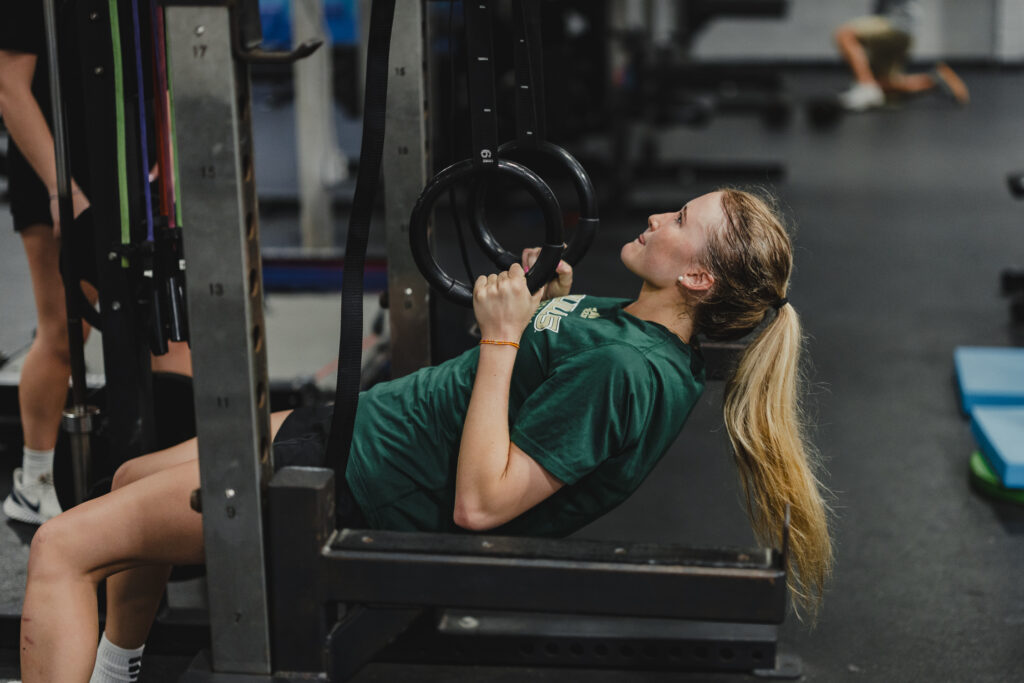
Volleyball is often viewed as a vertical sport — jumping, blocking, and attacking above the net. But what truly drives high-level performance in volleyball isn’t just what happens in the air. It’s what happens from the ground up.
At the center of that foundation is the posterior chain — the muscles on the back side of the body that are responsible for producing power, controlling landings, and protecting athletes from injury.
For volleyball players at every level, a strong posterior chain isn’t optional. It’s essential.
What Is the Posterior Chain?
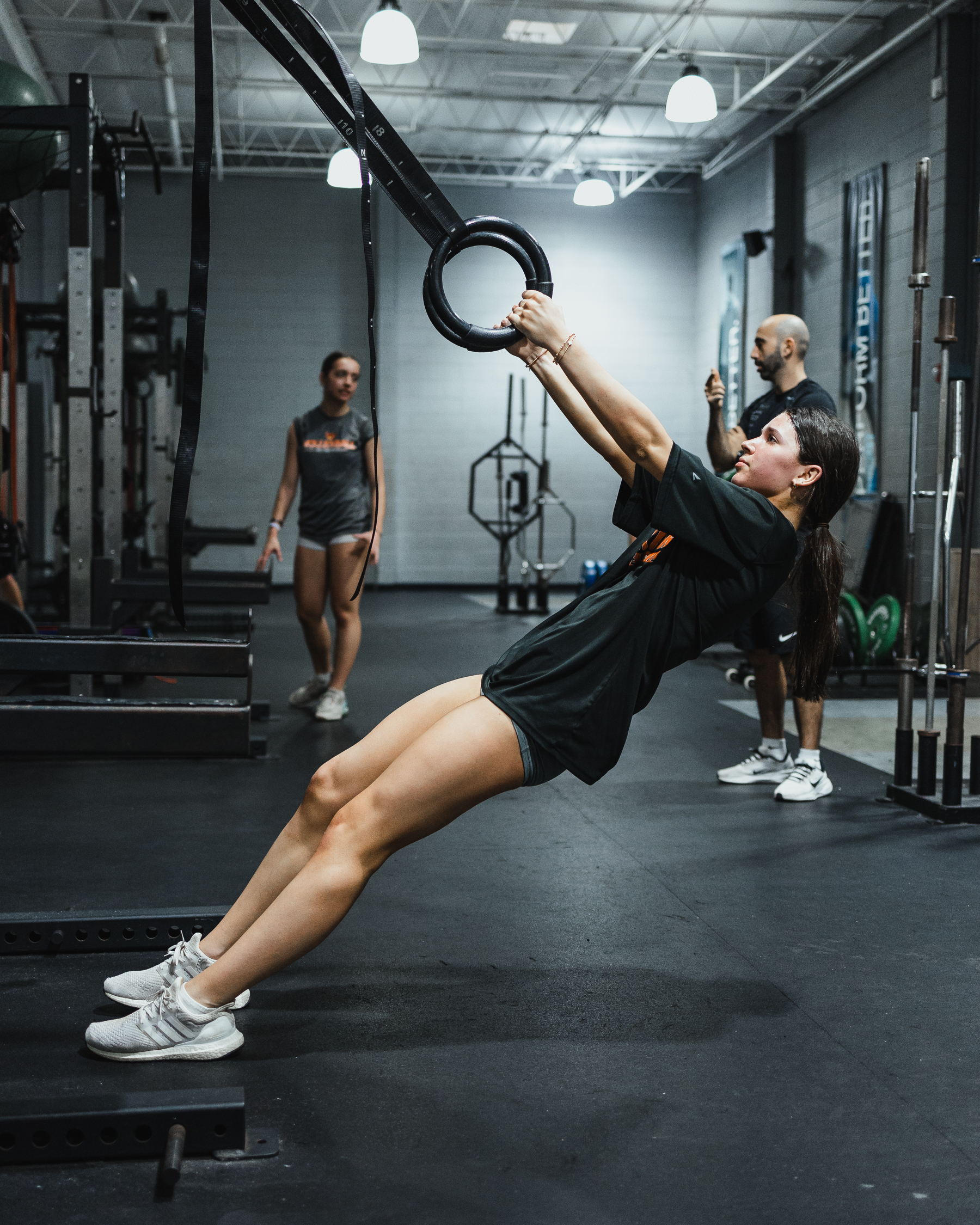
The posterior chain refers to the interconnected muscles along the back side of the body, including:
- Glutes
- Hamstrings
- Calves
- Spinal erectors
- Upper back musculature
These muscles work together to:
- Produce force into the ground
- Stabilize the hips and spine
- Absorb and redirect force during dynamic movement
In volleyball, nearly every explosive action depends on this system working efficiently.
Jumping Power Starts From the Back Side
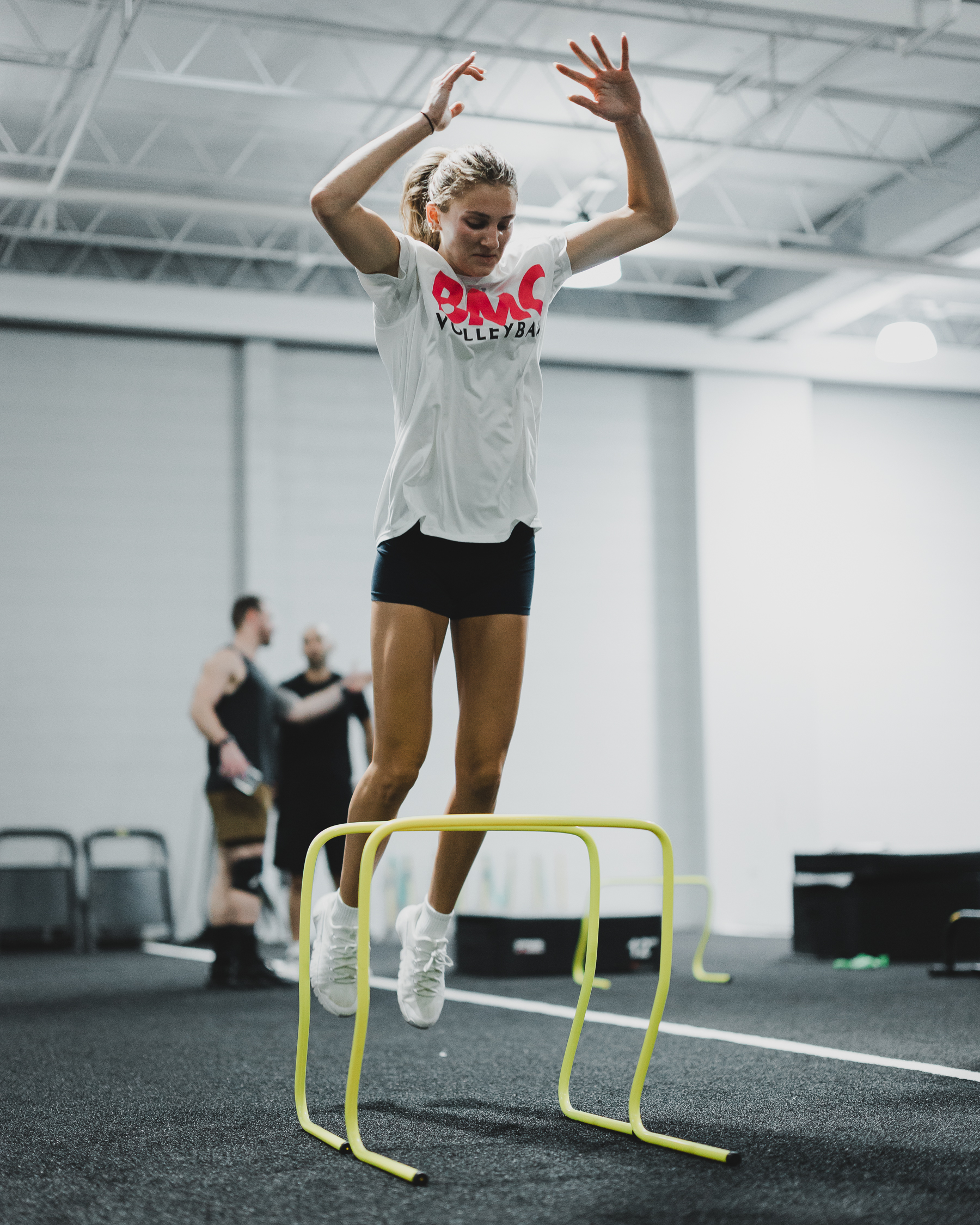
Maximal vertical jump height isn’t just about quads.
While the quadriceps contribute, the glutes and hamstrings are the primary drivers of powerful hip extension — the key movement behind jumping, attacking, and blocking.
Volleyball players with weak posterior chains often:
- Rely excessively on their quads
- Jump with poor hip extension
- Leak power during takeoff
Strong posterior chains allow athletes to:
- Generate more force off the floor
- Jump more efficiently
- Maintain power across long matches and tournaments
Posterior Chain Strength Improves Landing Mechanics
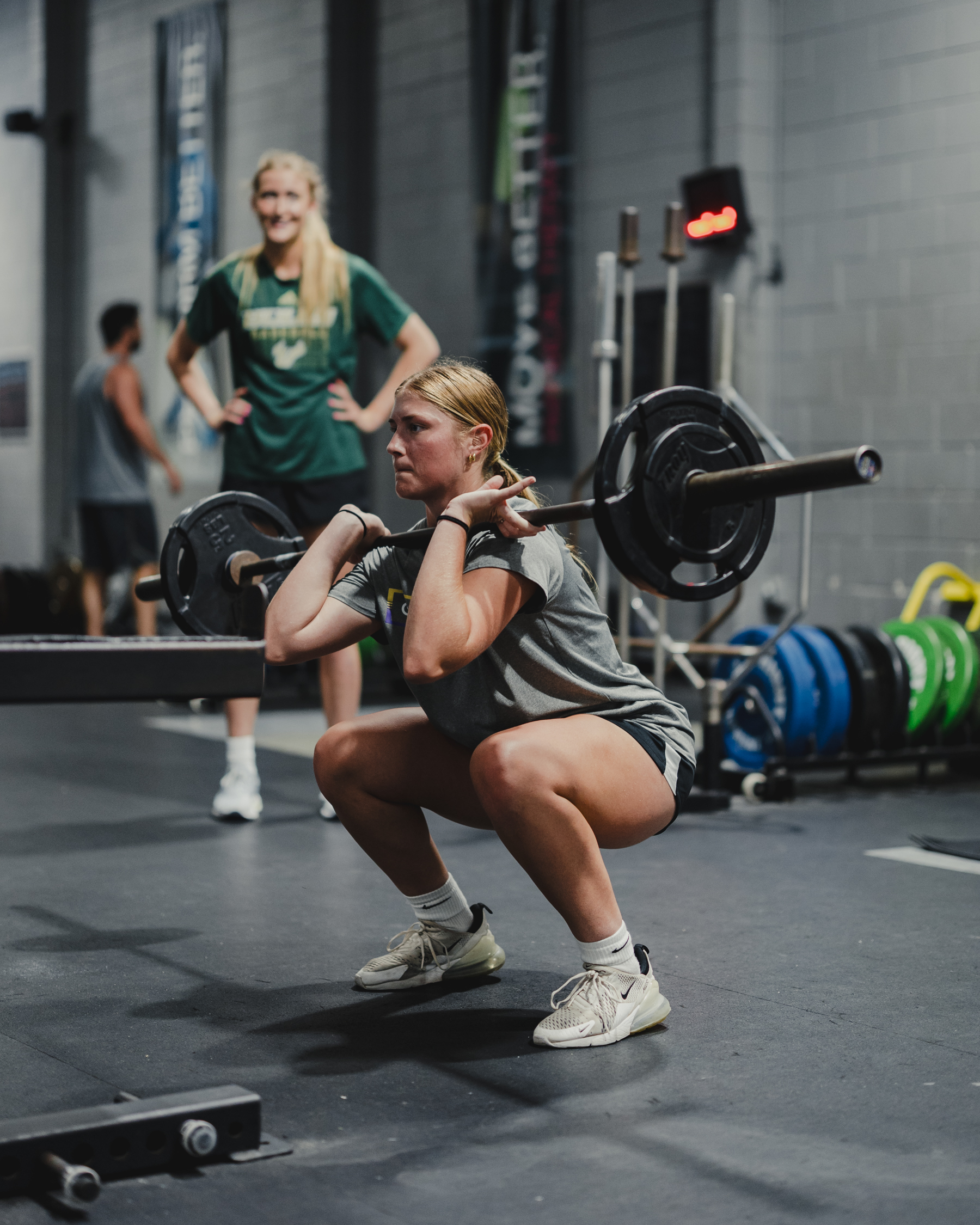
Volleyball involves repeated jumping and landing — sometimes hundreds of times per session.
Poor posterior chain strength often shows up during landings as:
- Excessive knee collapse
- Stiff, uncontrolled landings
- Overuse of the knees instead of the hips
A strong posterior chain helps athletes:
- Absorb force through the hips
- Decelerate more safely
- Reduce stress on the knees and lower back
This is critical for injury prevention, especially for ACL and patellar tendon issues.
Speed, Lateral Movement, and Court Coverage
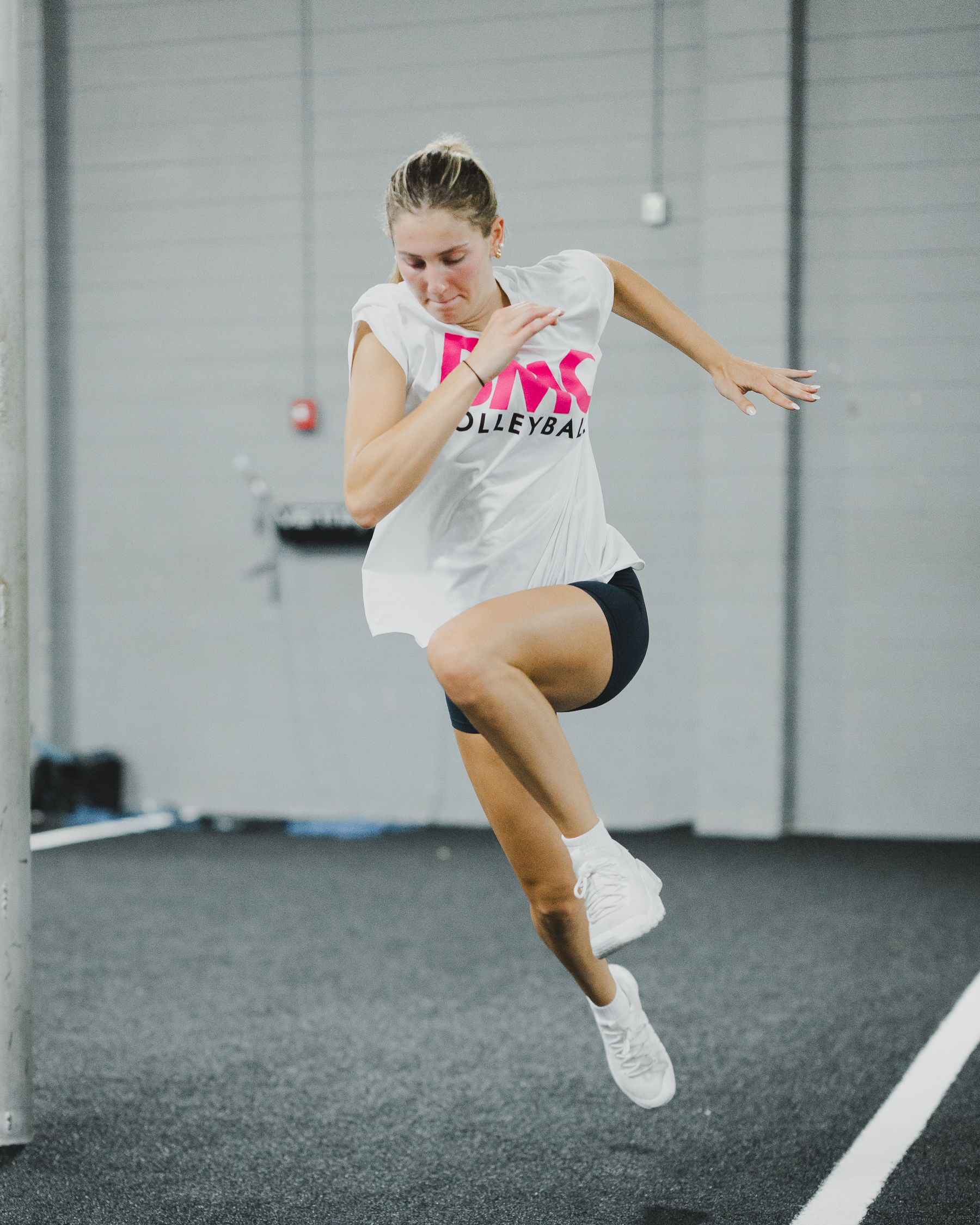
Volleyball isn’t just vertical — it’s reactive and lateral.
Quick transitions, defensive shuffles, approach footwork, and change-of-direction all rely heavily on the posterior chain.
Strong glutes and hamstrings improve:
- First-step quickness
- Lateral push-off power
- Ability to stop and re-accelerate
Athletes who lack posterior chain strength often feel slow, unstable, or fatigued late in matches.
Shoulder and Spine Health Depend on the Posterior Chain
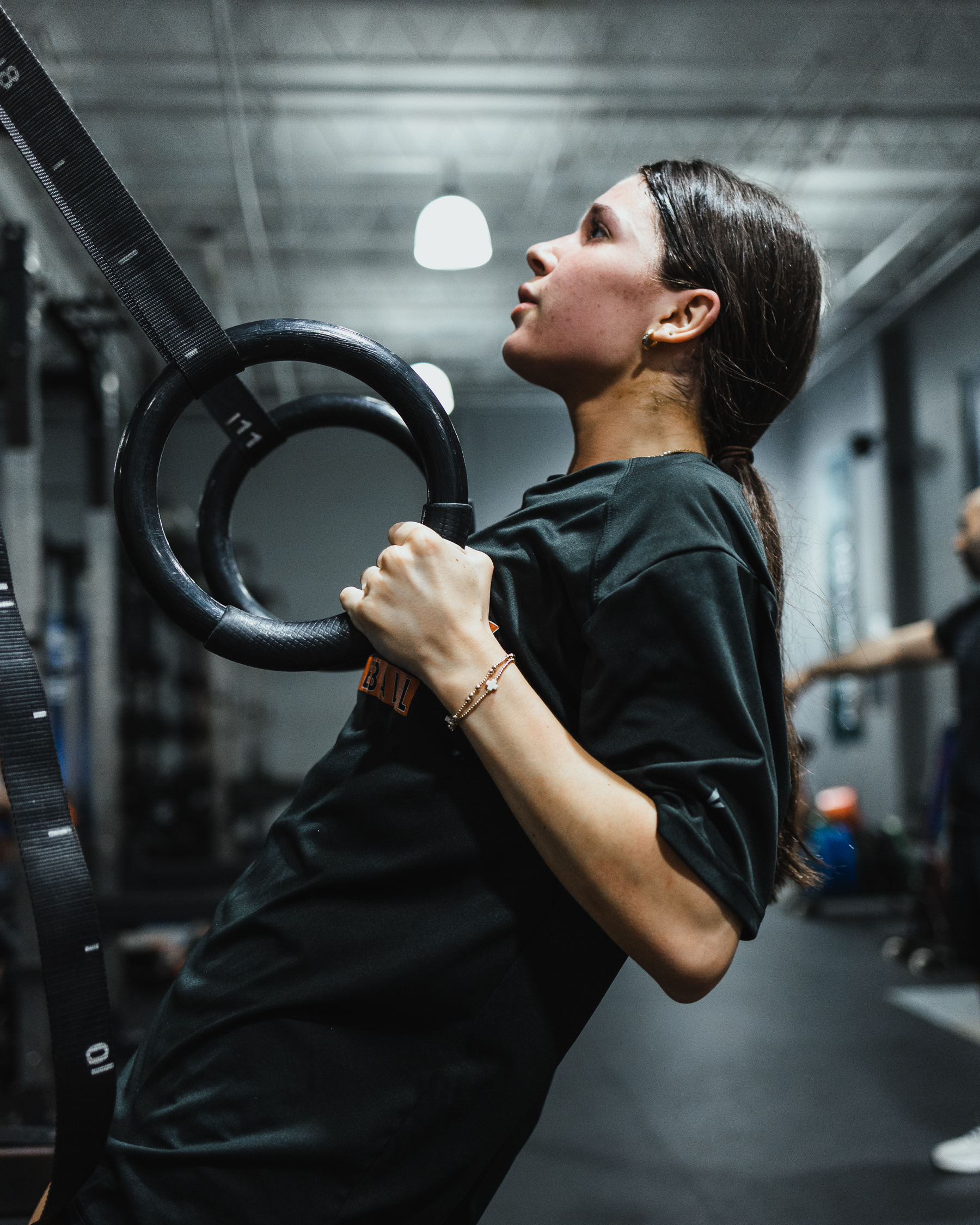
The posterior chain doesn’t stop at the hips.
Upper back strength and spinal control play a major role in:
- Maintaining posture during hitting and serving
- Supporting shoulder health
- Transferring force from the lower body to the upper body
Without adequate posterior chain strength, volleyball players often compensate with their shoulders or lower back, increasing the risk of overuse injuries.
Fatigue Resistance and Longevity
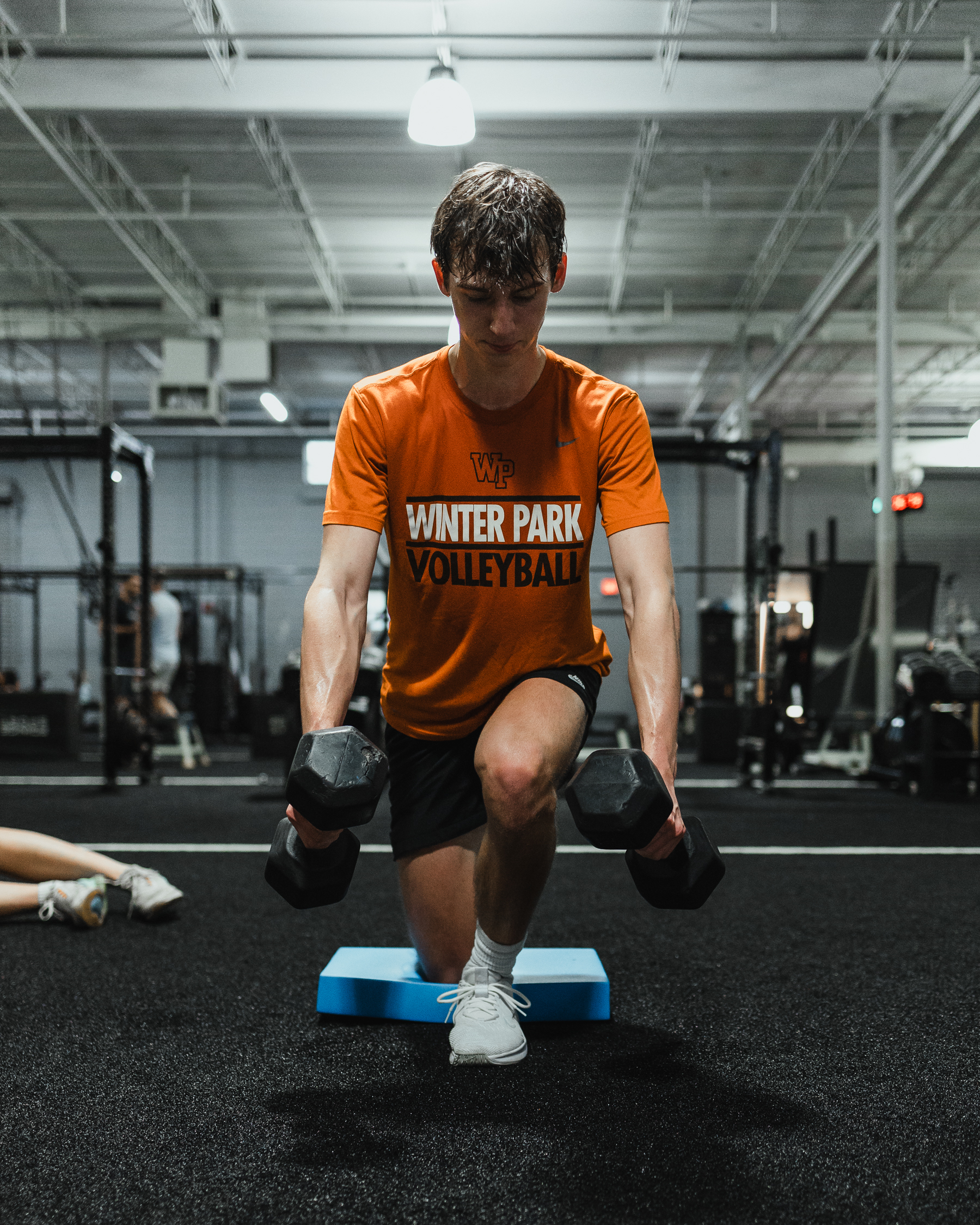
Volleyball tournaments are long. Practices are repetitive. Seasons are demanding.
A strong posterior chain helps athletes:
- Maintain mechanics under fatigue
- Preserve jump height late in matches
- Reduce breakdown in movement quality
This directly impacts both performance consistency and long-term durability.
Common Mistakes in Volleyball Training
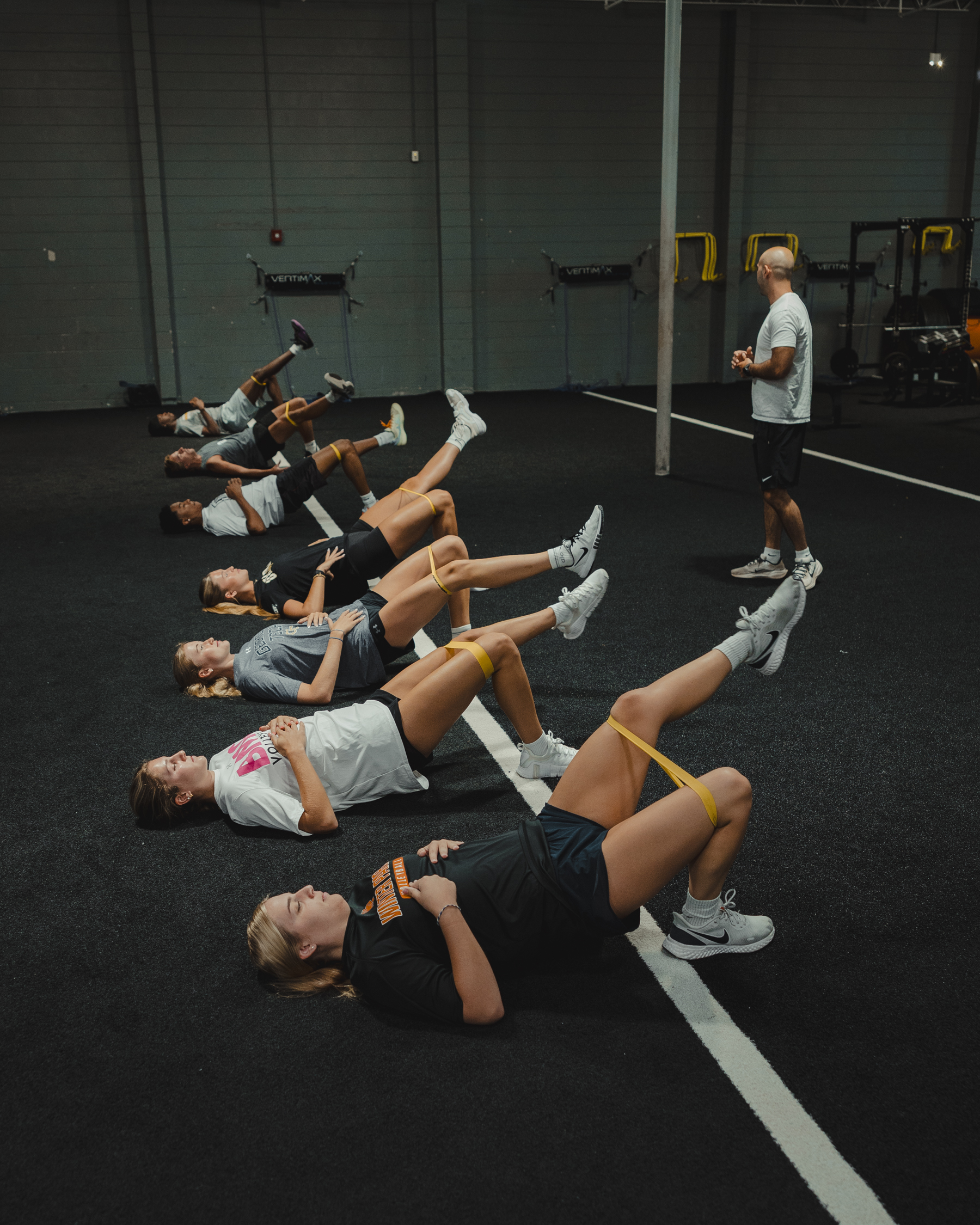
Many volleyball players — especially at younger ages — train in ways that underdevelop the posterior chain.
Common issues include:
- Overemphasis on quad-dominant movements
- Excessive jumping without adequate strength support
- Neglecting hip hinge patterns
- Limited posterior chain strength work
Training should balance jumping and skill work with strength development that supports those demands.
How We Address the Posterior Chain at SPECTRUM
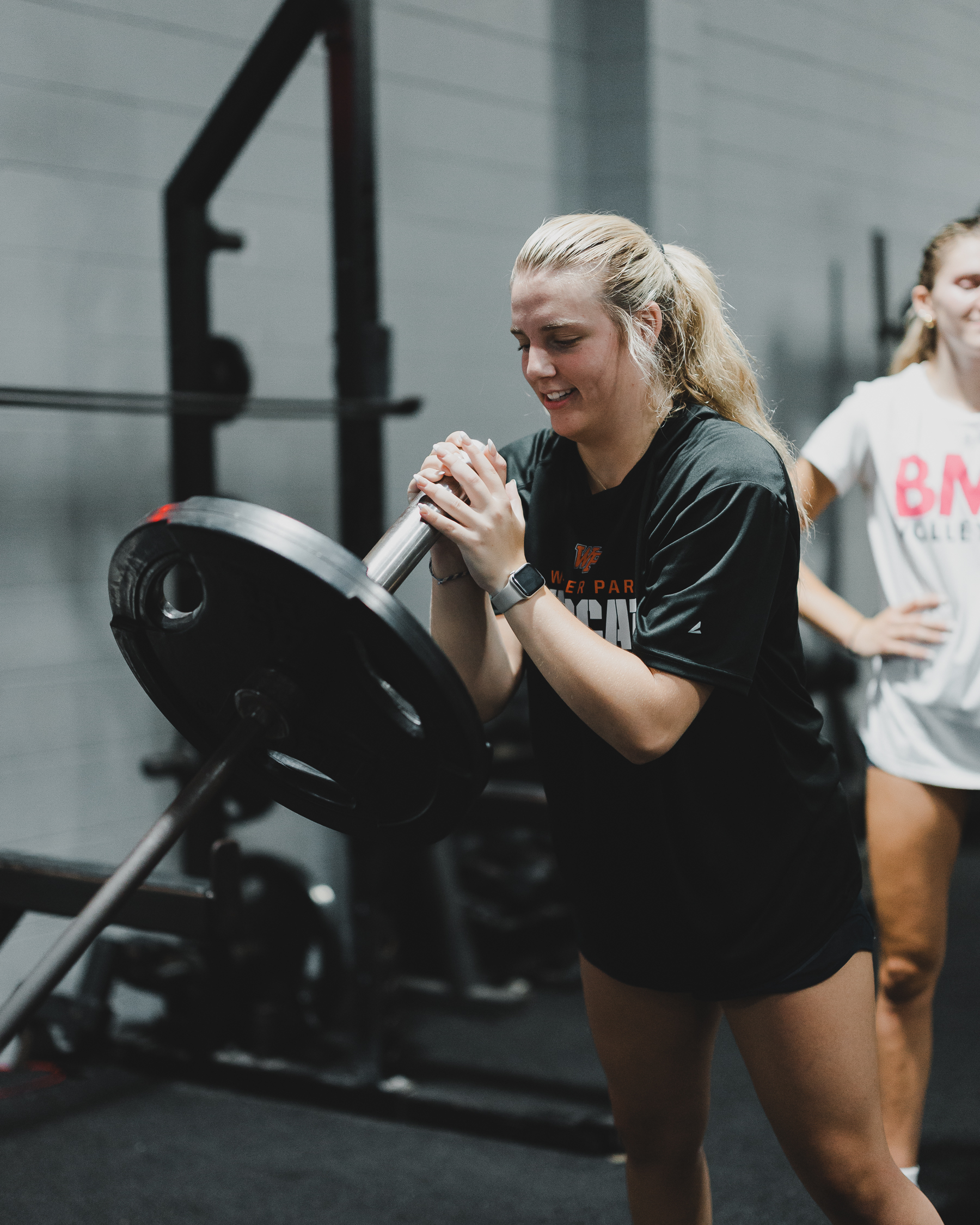
At SPECTRUM, posterior chain development is built intentionally into volleyball training programs.
This includes:
- Teaching proper hip hinge mechanics
- Progressive strength development for glutes and hamstrings
- Integrating posterior chain work into speed, power, and landing training
- Emphasizing quality movement before volume
The goal isn’t just higher jumps — it’s healthier, more resilient athletes.
Final Thoughts
Volleyball performance doesn’t come from isolated muscles or endless jumping drills.
It comes from a well-developed system that can produce, absorb, and transfer force efficiently.
A strong posterior chain allows volleyball players to:
- Jump higher
- Move faster
- Land safer
- Stay healthier longer
That’s why posterior chain strength isn’t an accessory in volleyball training — it’s a foundation.
Leave a Reply