



Long-Term Athlete Development vs. Short-Term Wins
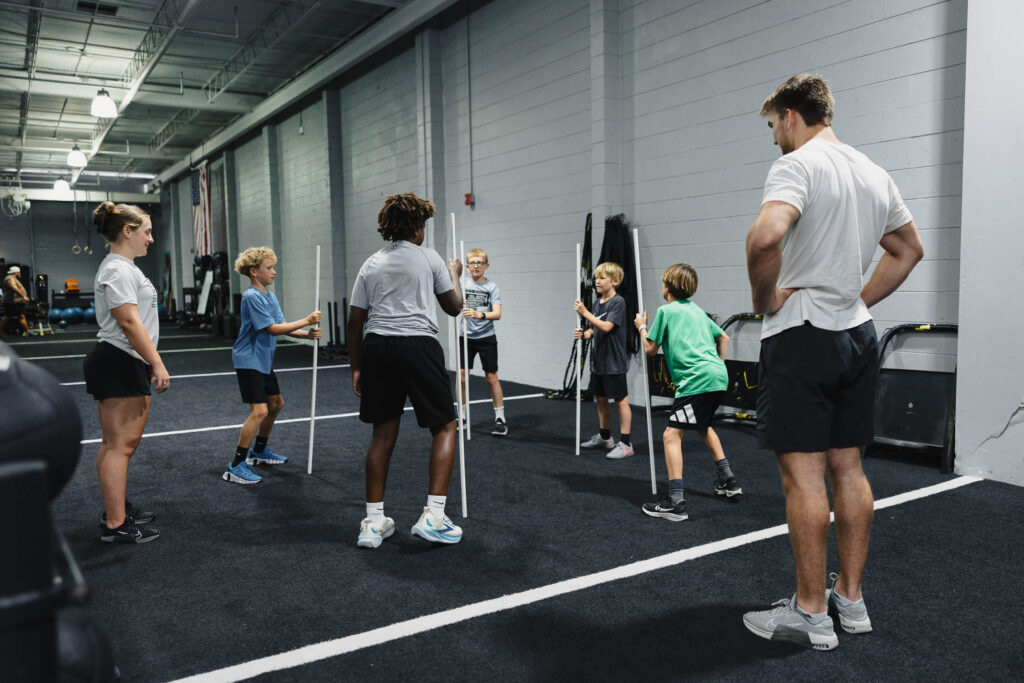
Youth sports are more competitive than ever. Athletes are specializing earlier, playing more games, attending more showcases, and feeling pressure to perform at younger ages.
That environment makes it easy to focus on what is happening right now.
Did we win this weekend? Did the athlete make the top team? Are they starting? Are they faster or stronger than everyone else? Are they getting noticed?
There is nothing wrong with competition or wanting to win. But when we’re developing young athletes, we have to think beyond the current season.
The goal shouldn’t be to create the best 12-year-old athlete. The goal should be to give that 12-year-old the physical foundation to become the best 16-, 18-, or 22-year-old athlete they can become.
That’s the difference between chasing short-term success and focusing on Long-Term Athlete Development.
Young Athletes Develop at Different Rates
One of the biggest challenges in youth sports is that chronological age doesn’t always tell us where an athlete is developmentally.
Put twenty 13-year-olds together and you can see significant differences in height, weight, strength, speed, coordination, and physical maturity.
An early-maturing athlete may suddenly become bigger, faster, and more powerful than everyone around them. That physical advantage can create immediate success.
Another athlete of the exact same age may be several years behind physically. They may be smaller and slower despite having excellent technical ability, awareness, competitiveness, and long-term potential.
A few years later, those physical differences can look completely different.
That’s why we have to be careful about confusing early physical development with long-term athletic potential.
Where an athlete is today isn’t necessarily where they’ll finish.
Build the Athlete Before Specializing the Athlete
Young athletes need a broad foundation of physical abilities.
Before worrying about highly advanced or sport-specific training, athletes should learn how to:
Run. Jump. Land. Accelerate. Decelerate. Change direction. Squat. Hinge. Push. Pull. Rotate. Produce force. Absorb force.
These are athletic skills.
A soccer player needs them. A basketball player needs them. A volleyball player needs them. A baseball player needs them.
The better an athlete becomes at these fundamental qualities, the larger their physical toolbox becomes as they mature.
This is also why strength training at younger ages shouldn’t simply be about lifting more weight.
We’re teaching athletes how to train.
Learning proper technique, understanding movement, controlling their body, and gradually developing strength creates a foundation that allows training to become more advanced later.
Don’t Let Today’s Strength Become Tomorrow’s Weakness
Early physical advantages can sometimes hide deficiencies.
Consider a young soccer player who is significantly faster than everyone else. They may be able to knock the ball forward and simply outrun defenders.
It works.
But because it works, that athlete may not be forced to develop better positioning, technical skill, change-of-direction ability, or decision-making.
Eventually, everyone gets faster.
The advantage disappears.
The same thing happens with bigger athletes who can overpower everyone at younger ages.
Long-term development means recognizing what an athlete needs even when they can currently succeed without it.
We aren’t just training for the demands they’re facing today. We’re preparing them for the demands they’ll encounter at the next level.
More Isn’t Always Better
Short-term thinking also shows up in how much young athletes are doing.
More practices. More games. More tournaments. More private lessons. More showcases. More training.
There eventually becomes a point where adding more doesn’t create more development.
Athletes need an appropriate training stimulus, but they also need opportunities to recover and adapt.
This becomes especially important during periods of rapid growth when coordination, strength, mobility, and recovery can all temporarily change.
A smart development program doesn’t ask:
How much can we make this athlete do?
It asks:
What does this athlete need right now to continue progressing?
Sometimes that’s more training.
Sometimes it’s better training.
And sometimes it’s recovery.
Test to Track Development, Not Define Athletes
We’re big believers in testing young athletes.
Acceleration, max velocity, power, agility, strength, and conditioning data give us objective information about where an athlete is physically.
But testing a 13-year-old shouldn’t be used to determine whether they’re a “good” or “bad” athlete.
It’s a baseline.
Test. Train. Retest.
Did their sprint time improve?
Did they jump higher?
Are they producing more force?
Did their change-of-direction ability improve?
That’s where testing becomes powerful.
It allows athletes to compete against themselves and see that consistent training creates measurable progress.
Data should document the development process—not define the athlete.
Coaches and Parents Have to Play the Long Game
This is probably the hardest part of Long-Term Athlete Development.
Youth sports create urgency.
Parents worry their child will fall behind. Coaches have pressure to win. Athletes see other kids making teams, getting attention, and achieving things sooner than they are.
But development doesn’t happen on the same timeline for everyone.
Sometimes the best decision for long-term development doesn’t produce the biggest short-term win.
An athlete may need more time developing fundamentals instead of specializing. They may benefit from strength and speed training instead of another skills session. They may need a lower competitive level where they can actually play and develop. They may simply need time to physically mature.
Patience doesn’t mean lowering expectations.
It means understanding when those expectations should be reached.
What Are We Actually Preparing Them For?
At SPECTRUM Performance, our objective with young athletes isn’t to peak them at 12, 13, or 14 years old.
We want to build the physical qualities they’ll continue using throughout their athletic careers.
Develop movement.
Build strength.
Teach speed.
Learn to accelerate and decelerate.
Jump and land properly.
Develop coordination.
Introduce appropriate power.
Track progress.
And progressively increase the demands as the athlete becomes physically prepared for them.
The program should evolve as the athlete evolves.
There will always be pressure in youth sports to focus on the next game, tournament, team, or season.
Those things matter.
But they aren’t the finish line.
Winning today is great. Building an athlete who is still getting better years from now is the real objective.
Because with young athletes, the most important question isn’t:
How good are they right now?
It’s:
What are we doing today to prepare them for who they can become tomorrow?
Leave a Reply