



How to Train During Busy Competition Schedules
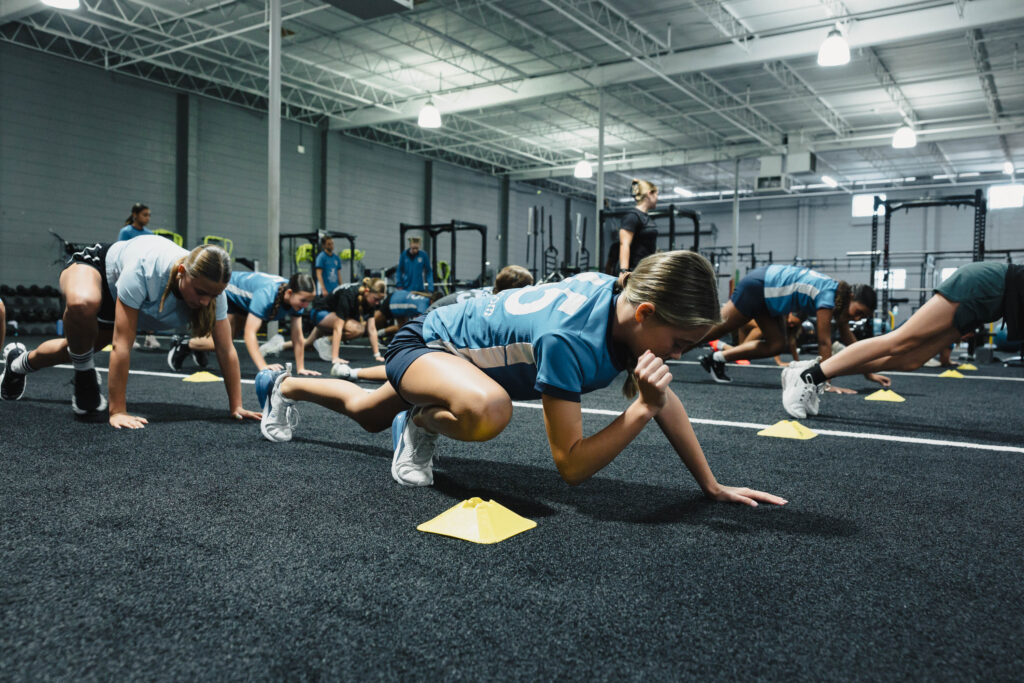
Why Maintaining Strength, Speed, and Power Matters More Than You Think
Every athlete loves competition. Friday night football games, weekend soccer tournaments, back-to-back baseball doubleheaders, swim meets, volleyball tournaments, and basketball showcases are why athletes train in the first place.
But as competition ramps up, one of the biggest mistakes athletes make is assuming that games alone are enough to maintain their physical abilities.
They aren’t.
During busy competition schedules, the goal of training changes. You’re no longer trying to build new qualities at the same rate you would during the offseason. Instead, your focus shifts to maintaining strength, speed, power, mobility, and resilience while staying fresh enough to perform at your highest level.
The athletes who understand this are often the ones who finish the season strongest while everyone else gradually declines.
Competition Is Stress
Every practice and every game creates stress on the body.
High-speed running, jumping, cutting, collisions, throwing, swimming, and repeated accelerations all require recovery before the body is ready to perform again.
However, not all stress is created equal.
Competition develops sport-specific skills, tactical awareness, and decision-making. While it certainly challenges the body physically, it often lacks the targeted stimulus needed to maintain qualities like:
- Maximum strength
- Explosive power
- Sprint speed
- Tissue capacity
- Movement quality
- Injury resilience
Without supplemental training, these qualities begin to decline surprisingly quickly.
Use It or Lose It
Research consistently shows that athletes begin losing strength and power within just a few weeks when resistance training is removed completely.
The good news?
Maintaining performance requires significantly less training volume than building it.
In many cases, one to two quality strength sessions per week are enough to maintain nearly all of an athlete’s strength and power throughout an entire season.
This means athletes don’t need to spend hours in the weight room.
They simply need to remain consistent.
Shift Your Mindset: Train to Support Competition
The purpose of in-season training is different than offseason training.
Instead of chasing personal records every week, athletes should focus on:
- Staying explosive
- Maintaining strength
- Recovering well
- Reducing injury risk
- Feeling confident and prepared on game day
The weight room should support competition—not compete with it.
Prioritize Quality Over Quantity
When schedules become busy, less is often more.
Instead of long workouts filled with unnecessary volume, focus on high-quality movements that provide the greatest return.
Examples include:
Lower Body
- Trap Bar Deadlift
- Front Squat
- Split Squat
- Romanian Deadlift
Upper Body
- Bench Press
- Pull-Ups
- Rows
- Overhead Press
Explosive Training
- Box Jumps
- Medicine Ball Throws
- Broad Jumps
- Olympic Lift Variations
Speed
- Short Accelerations
- Flying Sprints
- Technique Drills
A focused 45-minute session often produces better results than a 90-minute workout filled with fatigue.
Keep Sprinting
One of the first athletic qualities athletes lose during long seasons is maximal speed.
Many sports provide opportunities to sprint.
Very few provide opportunities to sprint at maximum velocity.
Soccer players rarely hit top speed.
Basketball players almost never do.
Baseball players only sprint occasionally.
Volleyball players rarely exceed moderate running speeds.
If athletes never expose themselves to high-speed running, they gradually lose the ability to produce it.
Including just a few high-quality sprint efforts each week helps maintain:
- Neuromuscular efficiency
- Running mechanics
- Hamstring health
- Acceleration ability
- Maximum velocity
Speed is a skill.
Like every skill, it requires practice.
Recovery Becomes Training
During busy seasons, recovery isn’t optional.
It’s part of the training program.
Recovery strategies should include:
- Adequate sleep
- Proper hydration
- High-quality nutrition
- Soft tissue work
- Mobility
- Cold water immersion (when appropriate)
- Compression
- Active recovery sessions
Athletes who recover well often outperform athletes who simply train harder.
Listen to Fatigue—But Don’t Fear It
Athletes often confuse fatigue with being overtrained.
Feeling tired after competition is completely normal.
The goal isn’t to eliminate fatigue.
The goal is to manage it intelligently.
Coaches should adjust:
- Training volume
- Exercise selection
- Intensity
- Recovery strategies
without abandoning training altogether.
Some days require pushing.
Other days require maintaining.
Knowing the difference is what separates good programs from great ones.
A Sample Weekly Schedule
Every sport has unique demands, but here’s an example for an athlete with games on Tuesday and Friday.
Monday
- Speed Development
- Full Body Strength
- Mobility
Tuesday
- Competition
Wednesday
- Recovery
- Movement
- Light Strength
Thursday
- Speed Primers
- Explosive Work
- Mobility
Friday
- Competition
Saturday
- Recovery
Sunday
- Full Body Strength
- Tissue Maintenance
The exact schedule changes depending on travel, tournaments, practices, and individual needs, but the principle remains the same:
Train enough to maintain performance without creating unnecessary fatigue.
Don’t Chase Soreness
Many athletes judge workouts by how sore they feel afterward.
That mentality can become dangerous during the season.
In-season training isn’t about exhaustion.
It’s about preparation.
Athletes should leave the weight room feeling:
- Strong
- Fast
- Confident
- Ready to compete
Not exhausted for tomorrow’s practice.
Individualization Matters
No two athletes respond the same way.
Factors that influence training include:
- Playing time
- Position
- Travel demands
- Age
- Training experience
- Injury history
- Recovery ability
A starter playing every minute requires a different training approach than a reserve athlete receiving limited game time.
Similarly, a high school athlete playing one game per week has different needs than a college soccer player traveling across the country twice each week.
The best programs adjust accordingly.
The Long Season Advantage
Championship teams don’t simply peak early.
They remain physically prepared throughout the season.
Athletes who continue strength training, maintain speed, prioritize recovery, and adjust training loads intelligently are far more likely to stay healthy and continue improving while others slowly decline.
The goal isn’t to survive the season.
The goal is to finish stronger than you started.
At SPECTRUM Performance, we help athletes train with purpose throughout every phase of the year. Whether it’s the offseason, preseason, or the middle of a demanding competition schedule, our programs are designed to maximize performance while minimizing unnecessary fatigue—so athletes can perform their best when it matters most.
Leave a Reply