



What Is Triphasic Training and Why We Use It at SPECTRUM
In high-performance training, strength alone is not enough.
Athletes don’t just need to lift weight — they need to produce force, absorb force, and redirect force efficiently. This is where Triphasic Training comes in, and why it has become a foundational piece of how we develop athletes at SPECTRUM.
Triphasic Training is not a trend or a gimmick. It is a structured, science-driven system that addresses how muscles actually work during sport.
What Is Triphasic Training?
Triphasic Training is a strength and power development system popularized by Cal Dietz, built around the three distinct phases of muscle action:
- Eccentric – muscle lengthening under load (absorbing force)
- Isometric – muscle holding tension without movement (stabilizing force)
- Concentric – muscle shortening to produce movement (applying force)
Traditional strength programs heavily emphasize the concentric phase — lifting the weight — while often neglecting the other two. However, in sport, athletes spend far more time decelerating, stabilizing, and re-accelerating than simply pushing weight.
Triphasic Training intentionally targets all three phases to build athletes who are not just strong, but resilient, explosive, and efficient.
Why the Three Phases Matter in Sport
Every athletic movement — sprinting, jumping, cutting, tackling, landing — involves all three phases working together.
- Eccentric strength allows athletes to slow down safely, absorb contact, and control momentum
- Isometric strength creates joint stability and allows force transfer through the body
- Concentric strength produces the explosive actions we see on the field or court
If one phase is underdeveloped, performance suffers and injury risk increases.
Triphasic Training ensures none of these phases are overlooked.
Phase 1: Eccentric Training — Owning Deceleration

The eccentric phase focuses on controlling force as the muscle lengthens.
At SPECTRUM, this is where we often begin.
Why?
- Most injuries occur during deceleration
- Athletes struggle more with slowing down than speeding up
- Eccentric strength builds tissue tolerance and joint control
Examples include slow, controlled lowering tempos on squats, presses, and hinges.
Benefits:
- Improved braking mechanics
- Increased tendon and connective tissue strength
- Better movement awareness and control
Phase 2: Isometric Training — Building Stability and Force Transfer
The isometric phase focuses on holding tension without movement, often at the most mechanically demanding position.
This phase is critical for:
- Joint stability
- Postural control
- Efficient force transfer
In sport, athletes constantly encounter brief moments where the body must stiffen to redirect force — planting to cut, absorbing contact, or transitioning from braking to acceleration.
Isometric training teaches athletes to own these positions.
Benefits:
- Reduced energy leaks
- Improved posture and alignment
- Increased ability to transition between movements
Phase 3: Concentric Training — Expressing Power
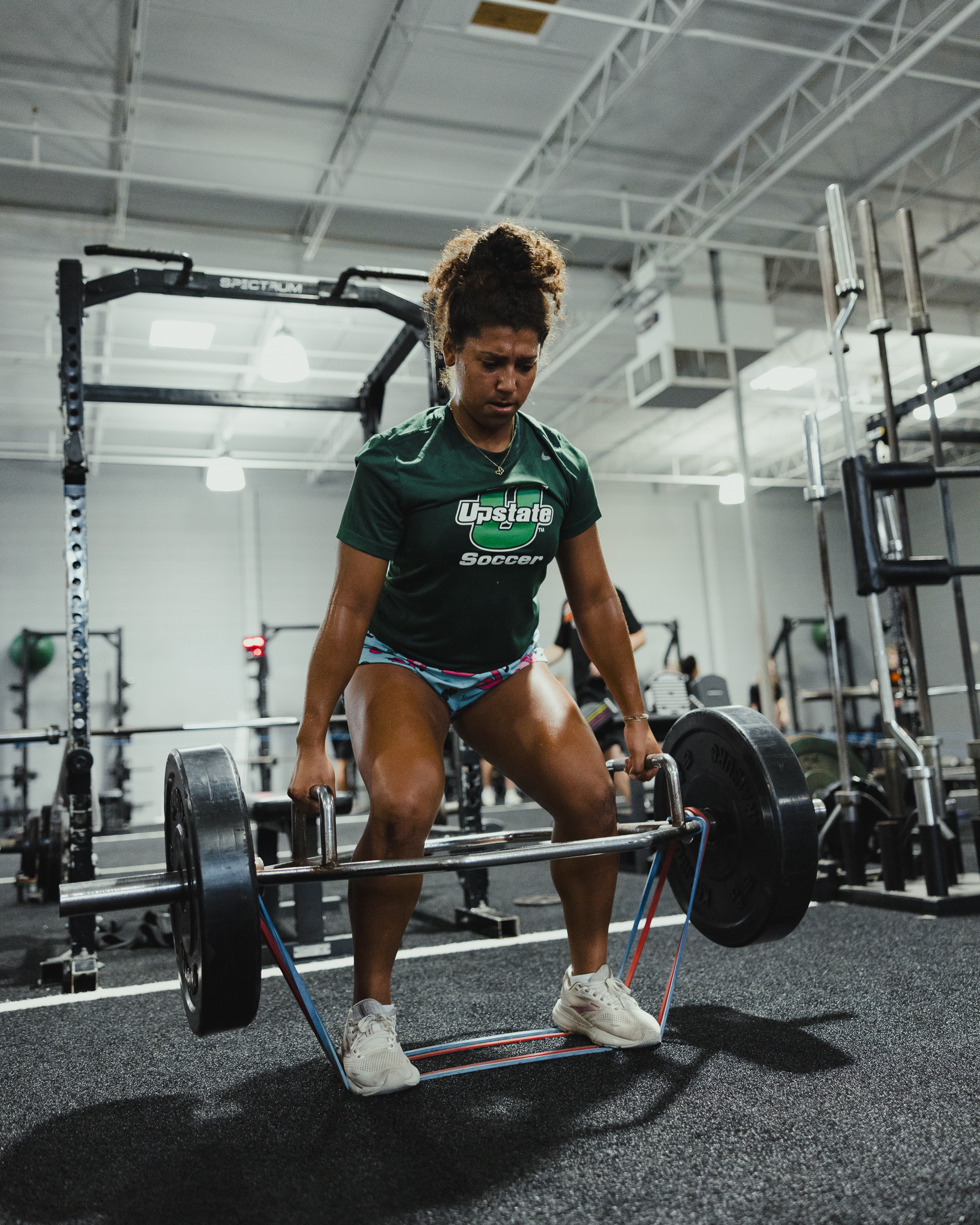
The concentric phase is where force is expressed explosively.
Because eccentric and isometric qualities have already been developed, athletes are now able to:
- Move with greater intent
- Apply force faster
- Maintain mechanics under speed
This phase often includes dynamic lifts, jumps, throws, and high-velocity movements.
Benefits:
- Improved acceleration and explosiveness
- Increased sport-specific power
- Better carryover to competition
Why We Use Triphasic Training at SPECTRUM
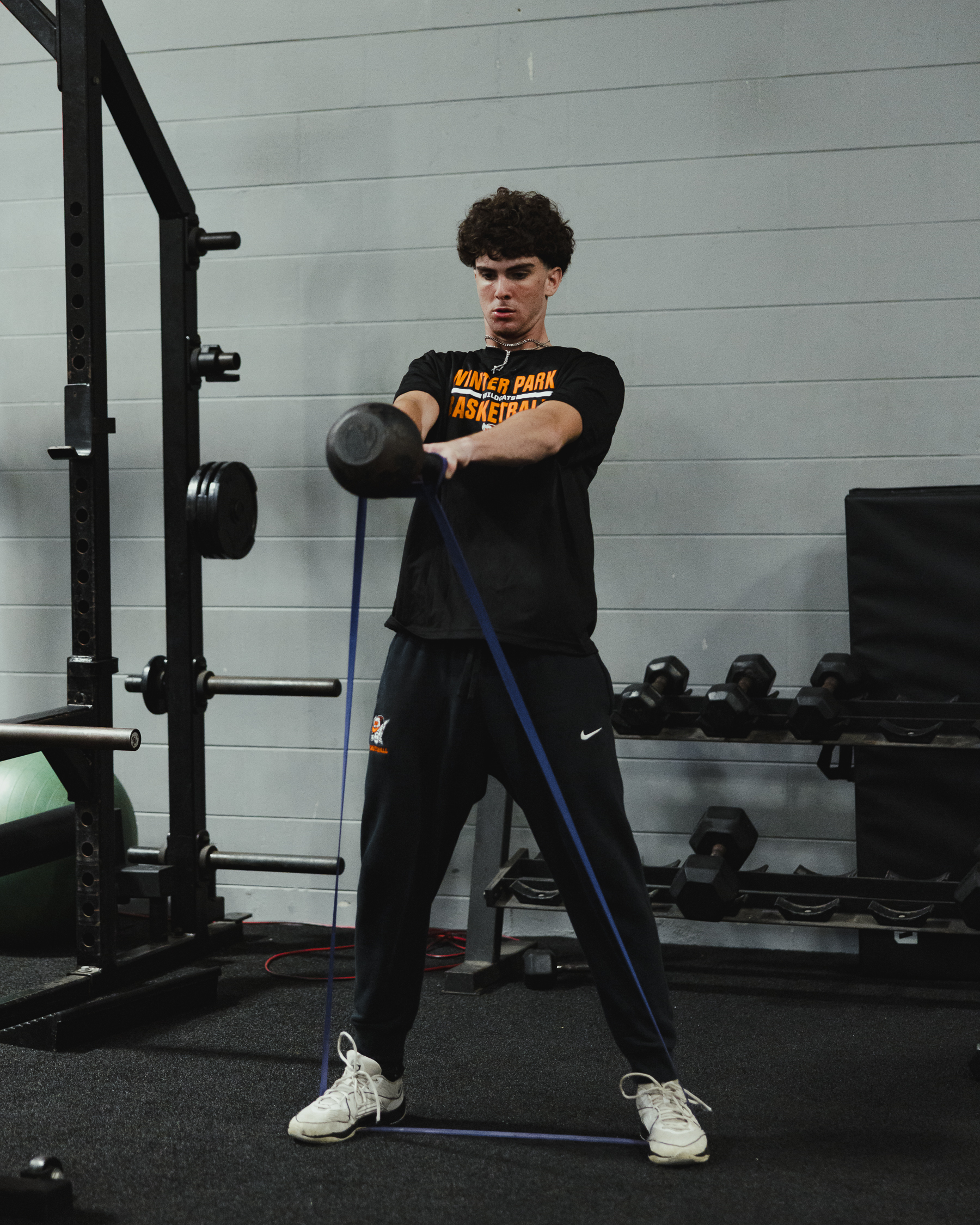
At SPECTRUM, our goal is not just to make athletes stronger in the weight room — it is to make them better movers, more durable, and more prepared for sport.
Triphasic Training aligns perfectly with our philosophy because it:
- Builds strength that transfers to sport
- Reduces injury risk through better force absorption
- Improves performance without unnecessary volume
- Creates structure and progression in training
Rather than chasing max numbers year-round, we focus on earning explosiveness through quality movement and strength development.
Who Benefits From Triphasic Training?

Triphasic Training is effective across all levels when applied correctly.
At SPECTRUM, we scale and adapt it for:
- Youth athletes building foundational strength
- High school athletes preparing for competitive seasons
- Collegiate and professional athletes seeking performance gains
- Return-to-sport athletes transitioning from rehab to performance
The system is flexible, but the principles remain the same.
Triphasic Training Is a System — Not a Shortcut
One of the biggest misconceptions is that Triphasic Training is just slow reps or pauses.
In reality, it is a long-term development system that:
- Respects adaptation timelines
- Emphasizes quality over quantity
- Prioritizes health alongside performance
When implemented correctly, it creates athletes who move better, perform better, and last longer.
Final Thoughts
Athletic performance is not built by skipping steps.
Triphasic Training forces athletes to address weaknesses, build true strength, and express power efficiently. That’s why it remains a cornerstone of how we train at SPECTRUM.
Strong athletes are good.
Resilient, explosive, and well-prepared athletes are better.
And that’s exactly what Triphasic Training helps us build.
Leave a Reply