



How French Contrast Training Improves Power in Athletes
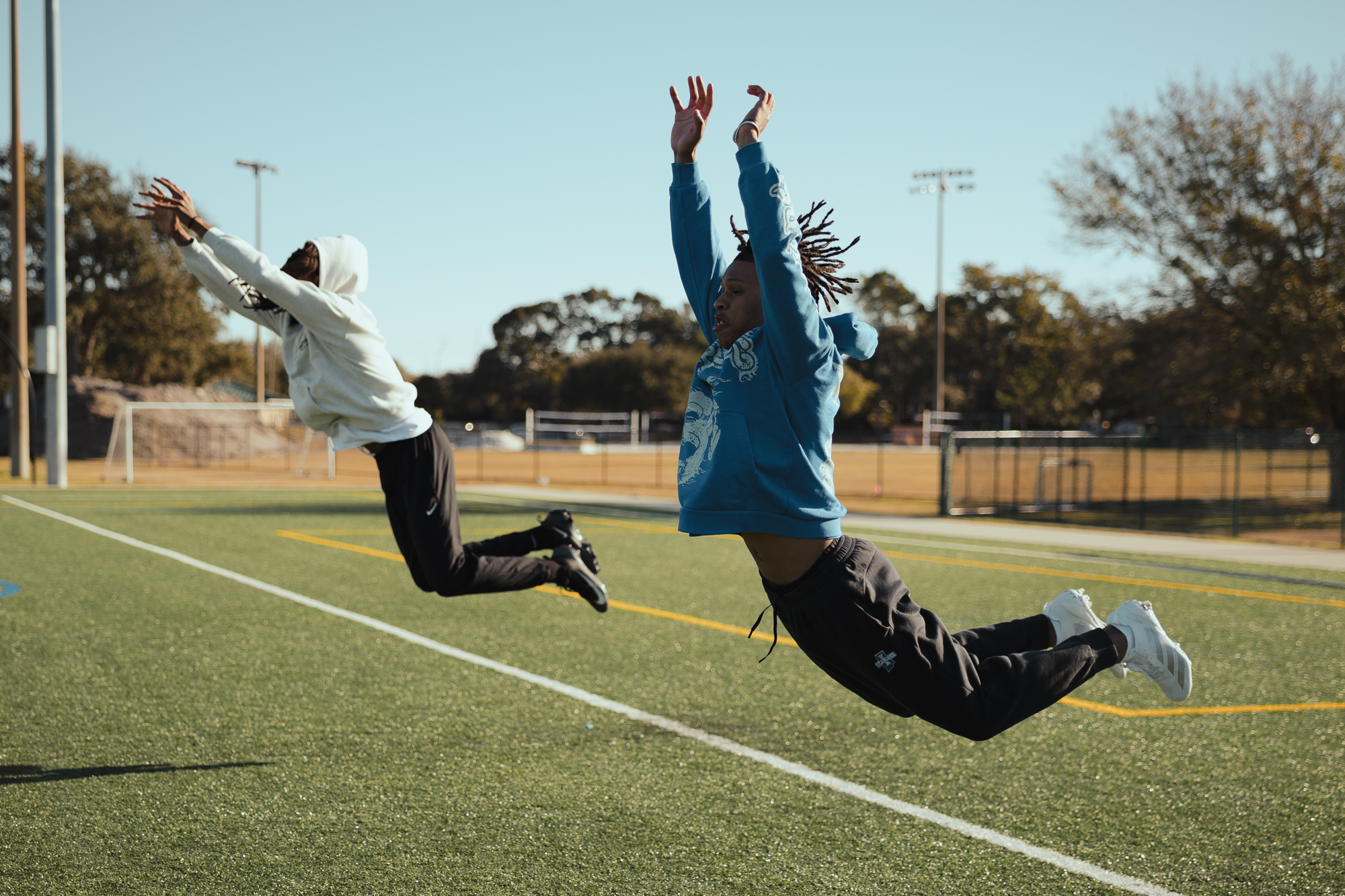
Power is one of the most valuable qualities in sport. Whether an athlete is sprinting down the field, jumping for a rebound, changing direction, or exploding out of a start, the ability to produce force quickly often separates average performance from elite performance.
One of the most effective methods for developing explosive power is French Contrast Training. This system combines strength, speed, and reactive exercises within the same training sequence to maximize the nervous system’s ability to produce force rapidly.
When applied correctly, French Contrast Training can significantly improve an athlete’s ability to generate explosive movements that translate directly to sport.
What Is French Contrast Training?
French Contrast Training is a strength and power training method that uses four exercises performed sequentially to target different parts of the force–velocity curve.
A typical sequence includes:
- Heavy compound lift (high force production)
- Plyometric movement (rapid force application)
- Loaded explosive movement (moderate load, high velocity)
- Assisted or accelerated plyometric (maximal speed)
This sequence exposes the nervous system to a range of loads and velocities in a short time frame, teaching the body to produce force more efficiently.
The Science Behind French Contrast Training
French Contrast Training is built around a concept known as post-activation performance enhancement (PAPE).
After performing a heavy strength movement, the nervous system becomes more activated. This temporary increase in neural drive allows subsequent explosive movements to be performed with greater speed and power.
By strategically pairing heavy lifts with explosive exercises, athletes can take advantage of this neurological effect.
The result is improved:
- Motor unit recruitment
- Rate of force development
- Power output
Understanding the Force–Velocity Curve
Athletic movements occur across a SPECTRUM of force and velocity.
- High force / low velocity: Heavy strength training
- Moderate force / moderate velocity: Loaded explosive movements
- Low force / high velocity: Plyometrics and sprinting
Many traditional training programs emphasize one part of this curve but neglect the others.
French Contrast Training intentionally addresses multiple zones of the force–velocity curve within the same training block, allowing athletes to develop power more completely.
A Sample French Contrast Sequence
A lower-body French Contrast set might look like this:
- Trap Bar Deadlift (Heavy) – 2–3 reps
- Box Jump – 3–5 reps
- Weighted Jump Squat – 3–5 reps
- Band-Assisted Jump – 3–5 reps
Athletes perform the exercises back-to-back with minimal rest between movements, followed by a longer recovery before repeating the sequence.
This approach stimulates both muscular and neurological adaptations that improve explosive performance.
Why French Contrast Training Works
1. It Improves Rate of Force Development
Many sports movements occur in less than 250 milliseconds. Athletes must produce force extremely quickly.
French Contrast Training improves the rate of force development, allowing athletes to generate more force in less time.
This is critical for:
- Sprint acceleration
- Jumping
- Rapid changes of direction
2. It Trains the Nervous System to Produce Power
Strength training improves force production, but power requires the nervous system to activate muscles quickly and in the correct sequence.
The rapid transitions between heavy lifts and explosive movements in French Contrast Training enhance neural coordination and motor unit recruitment.
3. It Maximizes Training Efficiency
Instead of separating strength and power into different sessions, French Contrast Training integrates both into a single sequence.
This allows athletes to develop multiple qualities simultaneously while keeping total training volume manageable.
4. It Transfers Well to Sport
Athletes rarely produce force under perfectly controlled conditions. Sport requires the ability to move from strength to speed instantly.
French Contrast Training mimics this demand by forcing the body to transition between force outputs and movement speeds.
Which Athletes Benefit Most?
French Contrast Training is particularly effective for sports that require high levels of explosive power, including:
- Football
- Soccer
- Basketball
- Volleyball
- Lacrosse
- Track and field
However, it is most appropriate for intermediate to advanced athletes who already possess a solid strength foundation and sound movement mechanics.
When to Use French Contrast Training
French Contrast methods are typically most effective during:
- Late off-season
- Preseason power phases
- Performance peaking cycles
During these periods, the goal shifts from simply building strength to expressing that strength as power.
Common Mistakes With French Contrast Training
Because it is a high-intensity method, French Contrast Training must be implemented carefully.
Common mistakes include:
- Using athletes who lack adequate strength foundations
- Performing too many sets and creating excessive fatigue
- Sacrificing movement quality for intensity
The goal is maximal intent and quality, not exhaustion.
How We Apply French Contrast Training
When implemented correctly, French Contrast Training becomes a powerful bridge between strength and speed.
In high-performance environments, it is often integrated alongside:
- Sprint training
- Plyometric progressions
- Strength development
- Sport-specific movement work
The goal is to ensure athletes can translate strength gained in the weight room into explosive performance on the field or court.
Final Thoughts
Power development is not simply about lifting heavier weights or performing more jumps.
It requires the nervous system, muscles, and connective tissues to work together to produce force rapidly and efficiently.
French Contrast Training provides a structured way to train these qualities simultaneously, helping athletes develop explosive power that carries over directly to sport.
When used strategically within a well-designed training program, it can become one of the most effective tools for building faster, more explosive athletes.
Leave a Reply